
 EN
EN


Modern agriculture faces a fundamental challenge: how to produce more food using less land. As urban populations grow and arable land becomes increasingly scarce, farmers and growers are turning to innovative solutions that reimagine the relationship between space and yield. The hydroponic tower has emerged as one of the most effective tools for achieving high planting density in constrained environments, fundamentally changing how vertical space is utilized in both commercial and small-scale farming operations.
Understanding how a hydroponic tower improves vertical planting density requires looking at the structural logic behind its design, the way it manages nutrients and water across multiple growing levels, and how it integrates into limited space farming systems. This article breaks down the mechanisms, practical advantages, and operational considerations that make the hydroponic tower a compelling choice for growers who need to maximize output per square meter without expanding their physical footprint.
The Structural Logic Behind Vertical Planting Density
How the Tower Form Factor Redefines Growing Space
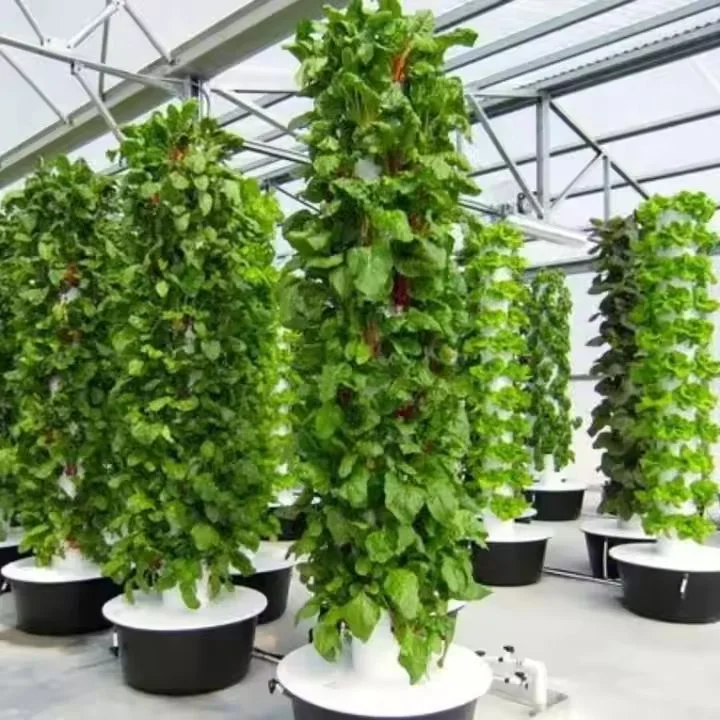
Traditional horizontal growing systems are constrained by floor area. Every plant occupies a fixed patch of ground, and expanding production means expanding the physical space of the farm. A hydroponic tower breaks this constraint by orienting the growing surface vertically. Plants are positioned in staggered ports along the height of the tower, allowing a single unit to support dozens of plants within the footprint of less than one square meter.
This vertical orientation is not simply a matter of stacking plants on top of each other. The design of a well-engineered hydroponic tower ensures that each plant receives adequate light exposure, airflow, and nutrient delivery regardless of its position on the structure. The staggered port arrangement prevents upper plants from shading lower ones, which is a critical factor in maintaining uniform growth across all levels of the tower.
In practical terms, a single hydroponic tower standing between 1.5 and 2 meters tall can accommodate anywhere from 20 to 50 plant sites depending on the model and crop type. When multiple towers are arranged in rows within a greenhouse or indoor facility, the cumulative planting density per square meter of floor space far exceeds what any conventional horizontal bed system could achieve in the same area.
Spatial Efficiency Compared to Conventional Horizontal Systems
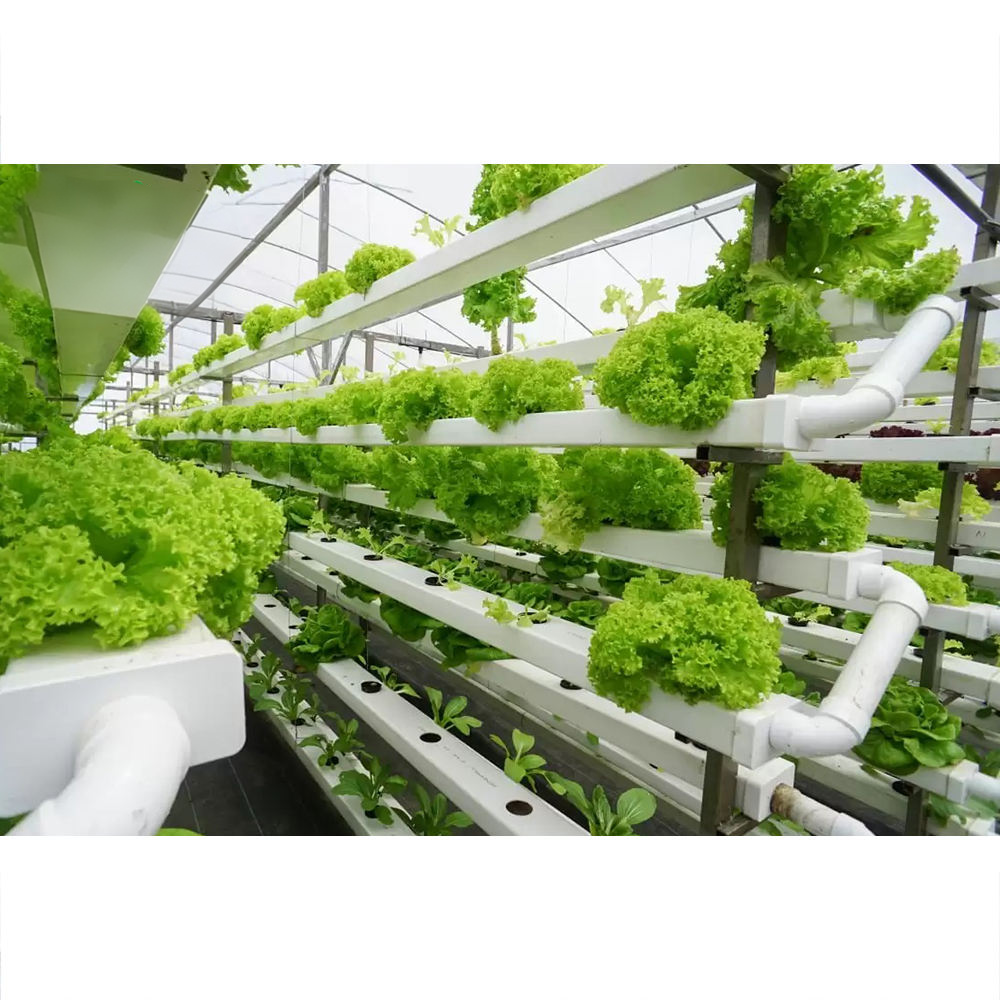
To appreciate the density improvement a hydroponic tower delivers, it helps to compare it directly against flat-bed or trough-based hydroponic systems. In a standard nutrient film technique trough, plants are spaced at intervals along a horizontal channel. The usable growing surface is essentially equal to the floor area of the channel. A hydroponic tower, by contrast, multiplies the effective growing surface by the number of vertical levels it contains.
This multiplication effect becomes especially significant in high-value real estate environments such as rooftop farms, urban warehouses, shipping container farms, and indoor vertical farming facilities. In these settings, every square meter of floor space carries a cost, whether measured in rent, energy for climate control, or infrastructure investment. The hydroponic tower allows operators to extract far more productive value from each unit of floor area, directly improving the economics of limited space farming.
Beyond raw plant count, the vertical arrangement also improves the ratio of productive growing surface to non-productive infrastructure. Walkways, irrigation lines, and support structures occupy a smaller proportion of total space when towers are used, because the growing volume extends upward rather than outward. This means more of the available space is actively contributing to crop production.
Nutrient and Water Delivery Across Multiple Vertical Levels
The Circulation Mechanism That Enables Uniform Growth
One of the most technically important aspects of a hydroponic tower is how it delivers water and dissolved nutrients to every plant site along its vertical axis. Most tower systems use a top-fed recirculating design, where a pump draws nutrient solution from a reservoir at the base and delivers it to the top of the tower. The solution then flows downward through the interior of the tower, passing each plant's root zone before returning to the reservoir.
This gravity-assisted flow ensures that every plant on the hydroponic tower receives a consistent supply of oxygenated, nutrient-rich solution without requiring individual drip emitters at each port. The simplicity of this mechanism is one of the reasons the hydroponic tower is well-suited to high-density planting: a single pump and a single reservoir can service an entire tower with dozens of plant sites, keeping infrastructure complexity low even as plant count increases.
Some advanced hydroponic tower designs incorporate aeroponic delivery, where the nutrient solution is misted directly onto the roots rather than flowing past them. This approach further enhances oxygen availability at the root zone, which accelerates nutrient uptake and can lead to faster growth rates. In both recirculating and aeroponic configurations, the closed-loop water system also reduces overall water consumption compared to soil-based growing, which is a meaningful advantage in water-scarce environments.
Managing Nutrient Consistency from Top to Bottom
A common concern with vertical growing systems is whether plants at the top of the structure receive the same quality of nutrient solution as those at the bottom. In a poorly designed system, the solution may become depleted of certain nutrients or lose dissolved oxygen as it travels downward, creating uneven growth across the height of the hydroponic tower.
Well-engineered hydroponic tower systems address this through careful flow rate calibration and reservoir management. By maintaining an appropriate pump cycle and ensuring the reservoir volume is sufficient relative to the number of plant sites, operators can keep nutrient concentration and pH within acceptable ranges throughout the entire tower. Regular monitoring of electrical conductivity and pH in the reservoir allows growers to make timely adjustments before any deficiency affects plant performance.
The recirculating nature of the system also means that any excess solution is recovered and reused rather than lost to runoff. This closed-loop efficiency is particularly valuable in indoor and urban farming environments where water and nutrient inputs represent a significant portion of operating costs. The hydroponic tower thus supports high planting density not just structurally but also in terms of resource utilization per plant.
Light Integration and Its Role in Vertical Density
Natural Light Distribution in Tower Arrangements
Achieving high planting density in a vertical system is only meaningful if every plant can access sufficient light for photosynthesis. In outdoor or greenhouse settings, a hydroponic tower benefits from natural light reaching plants on all sides as the sun moves across the sky. The cylindrical or multi-sided form of most tower designs means that plants positioned around the circumference receive light exposure throughout the day, reducing the shadowing effect that would occur in a flat vertical wall arrangement.
When multiple hydroponic tower units are arranged in a row or grid pattern, spacing between towers becomes an important design consideration. Towers placed too closely together will shade each other, negating the density advantage. Experienced growers typically space towers to allow adequate light penetration between units while still achieving a significantly higher plant count per floor area than horizontal systems would permit.
In greenhouse environments, the combination of natural light and reflective interior surfaces can further improve light distribution across all levels of the hydroponic tower. White or reflective wall and floor surfaces bounce light into the lower portions of the tower, helping to equalize light exposure between the top and bottom plant sites and supporting more uniform crop development across the full height of the structure.
Artificial Lighting for Indoor Vertical Farming Density
In fully indoor vertical farming systems, artificial lighting replaces or supplements natural light, and the placement of grow lights relative to the hydroponic tower becomes a critical design variable. LED grow lights are the dominant choice for indoor tower farming due to their energy efficiency, spectral tunability, and low heat output. Lights are typically positioned to illuminate the tower from the sides rather than from above, ensuring that plants at all vertical levels receive adequate photon flux.
Some indoor hydroponic tower systems integrate lighting directly into the tower structure, with LED strips or panels mounted at intervals along the height of the unit. This integrated approach allows for very precise light delivery to each plant site and enables extremely high tower density within the growing space, since external light fixtures do not need to be positioned between towers. The result is a compact, self-contained growing unit that maximizes both vertical and horizontal space utilization.
The ability to control light spectrum and photoperiod in indoor hydroponic tower systems also gives growers a tool for managing plant growth rates and crop cycles. By adjusting light intensity and duration, operators can accelerate growth during periods of high demand or slow it during periods of lower market need, adding a layer of production flexibility that outdoor or greenhouse systems cannot easily replicate.
Crop Selection and Density Optimization in Tower Systems
Which Crops Benefit Most from Tower-Based Vertical Density
Not all crops are equally suited to the hydroponic tower format, and understanding which plant types thrive in vertical tower systems is essential for maximizing planting density effectively. Leafy greens such as lettuce, spinach, kale, and arugula are among the most compatible crops for tower growing. Their compact root systems, relatively low light requirements, and fast growth cycles make them ideal candidates for high-density tower production.
Herbs including basil, cilantro, parsley, and mint also perform well in hydroponic tower environments. These crops have high market value relative to their size, which means the density advantage of the tower translates directly into strong revenue per square meter of floor space. For urban farms and specialty produce operations, herbs grown on hydroponic tower systems represent one of the most economically efficient uses of limited growing space.
Strawberries are another crop that has been successfully adapted to tower growing, particularly in commercial vertical farming operations. While their light and nutrient requirements are more demanding than leafy greens, the ability to grow strawberries vertically in a hydroponic tower allows producers to achieve yields that would be impossible in conventional horizontal strawberry beds within the same floor area. Careful attention to variety selection and nutrient management is required to achieve consistent results at high density.
Spacing, Rotation, and Harvest Cycles in High-Density Tower Farming
Maximizing planting density in a hydroponic tower system is not simply a matter of filling every available port with a seedling. Effective density management requires attention to plant spacing within the tower, staggered planting schedules to ensure continuous harvest, and rotation practices that prevent any single tower from becoming a reservoir for disease or pest pressure.
Staggered planting is particularly important for commercial operations that need a consistent daily or weekly harvest volume. By planting a portion of the tower's capacity at regular intervals rather than all at once, growers can maintain a rolling harvest cycle where some plants are always at peak maturity. This approach smooths out production peaks and troughs and makes better use of the tower's capacity over time.
Between crop cycles, thorough cleaning and sanitization of the hydroponic tower is essential for maintaining plant health at high density. The close proximity of plants in a tower system means that any pathogen or pest that establishes itself can spread rapidly if not controlled. Operators who build regular sanitation protocols into their production schedule consistently achieve better long-term density and yield outcomes than those who treat cleaning as an afterthought.
Integration into Limited Space Farming Systems
Adapting Tower Systems to Different Space Constraints
The hydroponic tower is inherently adaptable, which is one of the reasons it has found application across such a wide range of limited space farming contexts. In a small urban rooftop garden, a handful of towers can supply a household or small restaurant with fresh greens year-round. In a commercial indoor vertical farm occupying a converted warehouse, hundreds of towers arranged in dense rows can produce volumes of leafy greens that compete with field-grown produce on a per-unit-cost basis.
The modular nature of most hydroponic tower systems means that capacity can be scaled incrementally. A grower starting with a small number of towers can add units as demand grows without needing to redesign the entire growing system. This scalability is particularly valuable for new entrants to vertical farming who want to validate their production model before committing to a large capital investment.
In greenhouse environments, the hydroponic tower can be integrated alongside other growing systems to create a mixed-density production layout. Taller crops that are not well-suited to tower growing can be cultivated in horizontal beds or troughs, while the tower units handle high-density leafy green and herb production. This hybrid approach allows greenhouse operators to optimize their space utilization across a broader range of crop types.
Environmental Control and Its Impact on Tower Density Performance
The performance of a hydroponic tower in terms of planting density and yield is closely tied to the quality of environmental control in the growing space. Temperature, humidity, CO2 concentration, and airflow all influence how quickly plants grow and how densely they can be packed without experiencing stress or disease pressure. In well-controlled indoor environments, the hydroponic tower can operate at its maximum theoretical density because the growing conditions are optimized for plant performance rather than constrained by weather or seasonal variation.
Airflow is a particularly important environmental variable in high-density tower farming. When towers are packed closely together, air circulation between and around the units can become restricted, creating humid microclimates that favor fungal diseases. Adequate ventilation, whether through natural airflow in greenhouse settings or mechanical fans in indoor facilities, is essential for maintaining plant health at the densities that make the hydroponic tower economically attractive.
Growers who invest in environmental monitoring and control systems alongside their hydroponic tower infrastructure consistently report better density outcomes and lower crop loss rates than those who rely on passive environmental management. The data generated by sensors tracking temperature, humidity, and CO2 allows for proactive adjustments that keep growing conditions within the optimal range for high-density production.
FAQ
How many plants can a single hydroponic tower typically support?
The number of plants a single hydroponic tower can support varies by model and design, but most commercial towers accommodate between 20 and 50 plant sites. Towers designed for leafy greens and herbs typically have more ports spaced at shorter intervals, while those intended for larger plants like strawberries may have fewer, more widely spaced sites. The key advantage is that all of these plant sites occupy the footprint of less than one square meter of floor space.
Is a hydroponic tower suitable for all types of crops?
A hydroponic tower is best suited to compact, fast-growing crops with relatively shallow root systems. Leafy greens, herbs, and strawberries are the most commonly grown crops in tower systems. Root vegetables, large fruiting crops like tomatoes or cucumbers, and crops with extensive root systems are generally not well-suited to the tower format because their size and root volume exceed what the tower's plant ports can accommodate effectively.
How does a hydroponic tower manage water and nutrient delivery to all plant levels?
Most hydroponic tower systems use a top-fed recirculating design where a pump delivers nutrient solution to the top of the tower and gravity carries it downward past each plant's root zone before it returns to the reservoir. This simple mechanism ensures consistent nutrient delivery to all levels without requiring individual emitters at each plant site. Regular monitoring of reservoir pH and nutrient concentration is necessary to maintain solution quality across the full height of the tower.
What are the main space requirements for setting up a hydroponic tower system?
A single hydroponic tower typically requires less than one square meter of floor space, but adequate clearance around each tower is needed for light penetration, airflow, and maintenance access. In indoor settings, ceiling height must accommodate the full tower height plus any overhead lighting or irrigation infrastructure. When planning a multi-tower installation, growers should account for aisle space between rows to allow for planting, harvesting, and sanitation operations without disrupting adjacent towers.