
 EN
EN



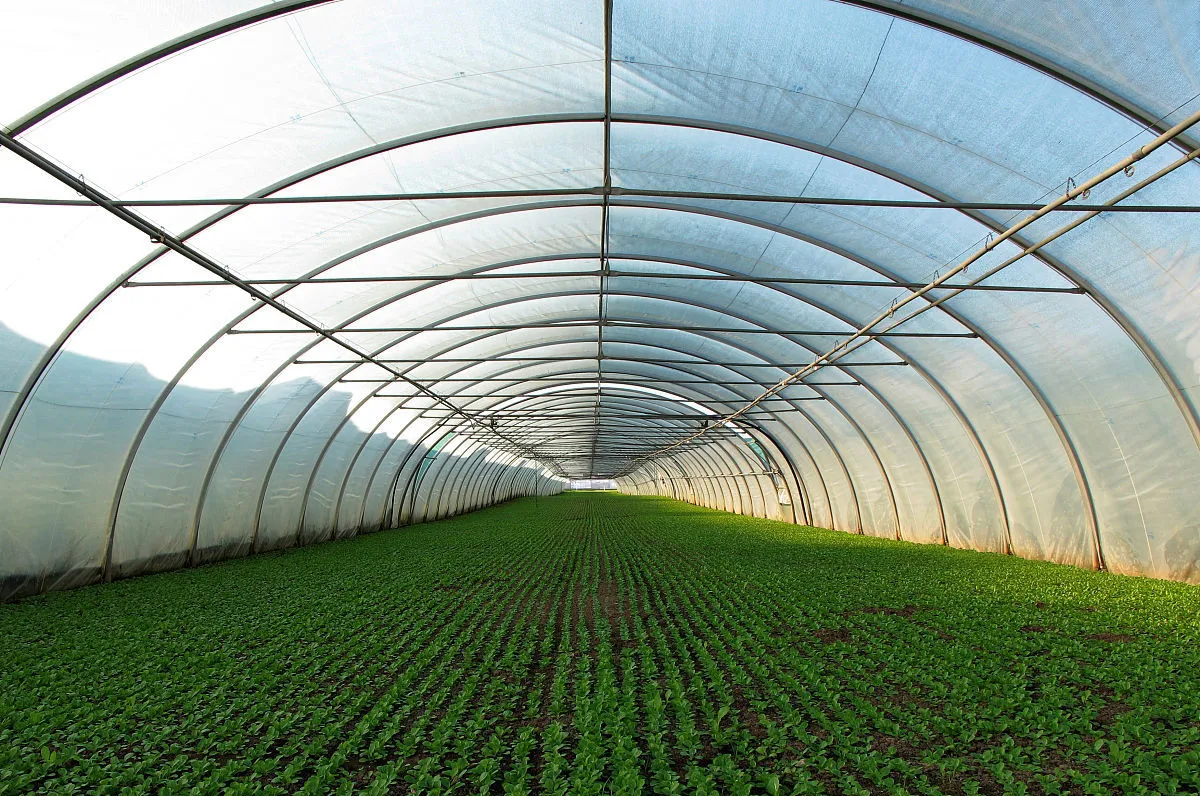
The global food system has long depended on vast stretches of arable land, seasonal weather patterns, and soil fertility cycles that are increasingly under pressure. As populations grow and climate variability intensifies, the limitations of conventional agriculture are becoming harder to ignore. indoor farming has emerged as a structurally different approach to food production — one that fundamentally decouples crop growth from the land, soil, and climate conditions that traditional agriculture depends on.
Understanding how indoor farming reduces dependency on traditional farmland resources requires looking at the specific mechanisms through which it replaces or eliminates each of those dependencies — from soil and water to land area and seasonal timing. This article examines those mechanisms in detail, explaining why indoor farming represents not just an alternative growing method, but a genuine structural shift in how and where food can be produced.
The Land Dependency Problem in Traditional Agriculture
Why Arable Land Is a Finite and Pressured Resource
Traditional farming requires large areas of arable land — soil that is fertile, well-drained, and climatically suitable for the crops being grown. Globally, arable land accounts for only a small fraction of total land area, and much of it is already under cultivation. Expanding agricultural output through conventional means typically means converting forests, wetlands, or grasslands, which carries significant ecological costs.
Soil degradation compounds the problem. Intensive cultivation depletes organic matter, disrupts microbial ecosystems, and increases erosion risk. Over time, land that was once highly productive requires increasing inputs — fertilizers, irrigation, and soil amendments — just to maintain yields. This creates a cycle of dependency where more land is needed to compensate for declining productivity on existing plots.
Indoor farming breaks this cycle by removing soil from the equation entirely. Crops are grown in controlled environments using hydroponic, aeroponic, or substrate-based systems that deliver nutrients directly to plant roots. The productivity of an indoor farming operation is not constrained by soil quality, land topography, or regional climate — it is determined by system design and management.
How Indoor Farming Compresses Land Use Through Vertical Stacking
One of the most direct ways indoor farming reduces farmland dependency is through vertical growing configurations. Rather than spreading crops horizontally across acres of land, indoor farming systems stack growing layers vertically within a controlled structure. A single warehouse or purpose-built facility can produce the equivalent output of a much larger conventional field footprint.
This vertical compression is particularly significant in urban and peri-urban contexts, where land is expensive and scarce. Indoor farming facilities can be established in repurposed industrial buildings, shipping containers, or purpose-built vertical structures located close to end consumers. The result is food production that requires a fraction of the land area that traditional agriculture would demand for equivalent output.
For operators and investors evaluating indoor farming, this land efficiency translates directly into site flexibility. Facilities can be located where logistics, labor, and market access are optimal — not where soil conditions happen to be suitable. This is a fundamental departure from the geographic constraints that define traditional farmland dependency.
Eliminating Soil Dependency Through Soilless Growing Systems
How Hydroponics and Aeroponics Replace Soil Functions
Soil in traditional agriculture serves multiple functions: it anchors plant roots, stores water, provides mineral nutrients, and hosts the microbial communities that support plant health. Indoor farming systems replicate or replace each of these functions through engineered alternatives. In hydroponic systems, nutrient-rich water solutions deliver minerals directly to roots suspended in inert growing media or flowing water channels. In aeroponic systems, roots are misted with nutrient solutions at timed intervals, eliminating the need for any growing medium at all.
These soilless approaches give indoor farming operators precise control over nutrient delivery that is simply not possible in field conditions. Nutrient concentrations, pH levels, and delivery timing can be adjusted in real time based on crop stage and environmental conditions. This precision reduces waste, improves uptake efficiency, and eliminates the variability that comes with relying on natural soil chemistry.
The practical implication for farmland dependency is significant. Indoor farming can be established on land that has no agricultural value whatsoever — contaminated brownfields, rocky terrain, desert environments, or urban rooftops. The quality of the underlying land is irrelevant because the growing system is entirely self-contained. This opens up food production possibilities in locations that traditional agriculture could never access.
Nutrient Cycling and Reduced Input Dependency
Traditional farming relies on soil nutrient cycles that are slow, variable, and difficult to manage precisely. Farmers apply fertilizers to compensate for nutrient depletion, but much of that input is lost to runoff, leaching, or volatilization before plants can absorb it. This inefficiency drives both cost and environmental impact, and it reinforces dependency on large land areas to dilute those losses.
Indoor farming systems recirculate nutrient solutions, capturing and reusing what plants do not absorb. This closed-loop approach dramatically reduces the volume of inputs required per unit of output. It also eliminates the nutrient runoff that contributes to water quality problems in agricultural regions, reducing the broader environmental footprint of food production.
For B2B buyers evaluating indoor farming infrastructure, this nutrient efficiency is a meaningful operational advantage. Input costs are more predictable, waste is minimized, and the system's performance is not subject to the soil variability that makes field-based production difficult to standardize across growing seasons.
Water Resource Independence in Indoor Farming
Closed-Loop Water Systems and Consumption Reduction
Water is one of the most constrained resources in traditional agriculture. Irrigated farming accounts for a substantial share of global freshwater withdrawals, and water scarcity is already limiting agricultural output in many regions. Traditional irrigation systems lose significant volumes to evaporation, soil absorption, and surface runoff — inefficiencies that are inherent to open-field growing conditions.
Indoor farming addresses this through closed or semi-closed water systems that recapture and recirculate moisture. Transpiration from plants is collected and returned to the system. Nutrient solutions are filtered and reused rather than discharged. The result is water consumption that is a fraction of what equivalent field production would require — often cited as 90% or more reduction compared to conventional irrigation, depending on the crop and system design.
This water independence is particularly relevant for indoor farming operations in arid regions, water-stressed urban areas, or locations where access to reliable irrigation infrastructure is limited. The ability to produce food with minimal water input, in a controlled environment, removes one of the most significant resource constraints that traditional farmland dependency creates.
Climate-Independent Water Management
In traditional agriculture, water availability is tied to rainfall patterns, seasonal cycles, and regional hydrology — all of which are increasingly unpredictable due to climate variability. Droughts, floods, and shifting precipitation patterns directly affect crop yields and force farmers to invest in expensive irrigation infrastructure to buffer against uncertainty.
Indoor farming eliminates this climate-water dependency by operating entirely within a controlled environment. Water delivery is managed by the system, not by weather. Crops receive consistent moisture regardless of external conditions, which stabilizes yields and removes the production risk associated with climate-driven water stress.
For supply chain planners and food producers evaluating indoor farming as a sourcing strategy, this climate independence is a core value proposition. It means production volumes are predictable, quality is consistent, and the operation is not exposed to the weather-related disruptions that regularly affect traditional farmland-based supply chains.
Seasonal and Geographic Dependency Reduction
Year-Round Production Without Seasonal Constraints
Traditional agriculture is fundamentally seasonal. Crops grow within defined windows determined by temperature, daylight, and frost cycles. Outside those windows, fields lie fallow or require expensive protective infrastructure. This seasonality creates supply gaps, price volatility, and logistical complexity for buyers who need consistent year-round supply.
Indoor farming removes seasonality from the production equation. With controlled lighting — typically LED systems tuned to specific spectral profiles — and climate management, crops can be grown continuously regardless of the time of year or the external environment. A single indoor farming facility can run multiple crop cycles annually, compressing the production timeline and delivering consistent output across all seasons.
This continuous production capability is one of the most commercially significant ways indoor farming reduces dependency on traditional farmland resources. It means buyers are not constrained to sourcing from regions where seasonal conditions happen to align with their procurement needs. Supply can be localized, scheduled, and scaled independently of the agricultural calendar.
Geographic Flexibility and Proximity to Markets
Traditional farmland is geographically fixed. The best agricultural land is often located far from population centers, requiring long supply chains, cold storage, and transportation infrastructure to move food from field to consumer. This geographic dependency adds cost, increases spoilage risk, and creates supply chain vulnerabilities that are difficult to mitigate.
Indoor farming can be located anywhere that has access to power, water, and a suitable structure. This geographic flexibility allows production to be positioned close to end markets — reducing transport distances, cutting cold chain requirements, and improving product freshness. For urban food systems, this proximity is a structural advantage that traditional farmland-based production cannot replicate.
The ability to site indoor farming operations based on market logic rather than soil geography represents a fundamental shift in how food production infrastructure can be planned and invested. It opens up new models for local food supply that are not dependent on the availability of nearby arable land.
Operational Implications for Businesses Adopting Indoor Farming
Predictability, Scalability, and Supply Chain Resilience
For businesses evaluating indoor farming as part of their production or sourcing strategy, the reduction in farmland dependency translates into concrete operational benefits. Production volumes are more predictable because they are not subject to weather, soil variability, or seasonal constraints. Quality parameters — size, color, nutrient content — can be standardized across batches in ways that field production cannot reliably achieve.
Scalability is also more straightforward in indoor farming than in traditional agriculture. Expanding output means adding growing capacity within a controlled system, not acquiring and preparing additional land. This makes indoor farming a more capital-efficient path to scaling food production in contexts where land acquisition is expensive, slow, or environmentally constrained.
Supply chain resilience is another dimension where indoor farming delivers structural advantages. Operations that are not dependent on specific geographic regions, seasonal windows, or soil conditions are inherently less exposed to the disruptions — droughts, floods, pest outbreaks, geopolitical instability — that regularly affect traditional farmland-based supply chains.
Investment Considerations and System Selection
Adopting indoor farming requires upfront investment in infrastructure, lighting, climate control, and growing systems. The capital intensity is higher than traditional farming on a per-unit basis, but the operational advantages — land independence, water efficiency, year-round production, and location flexibility — justify the investment in many commercial contexts.
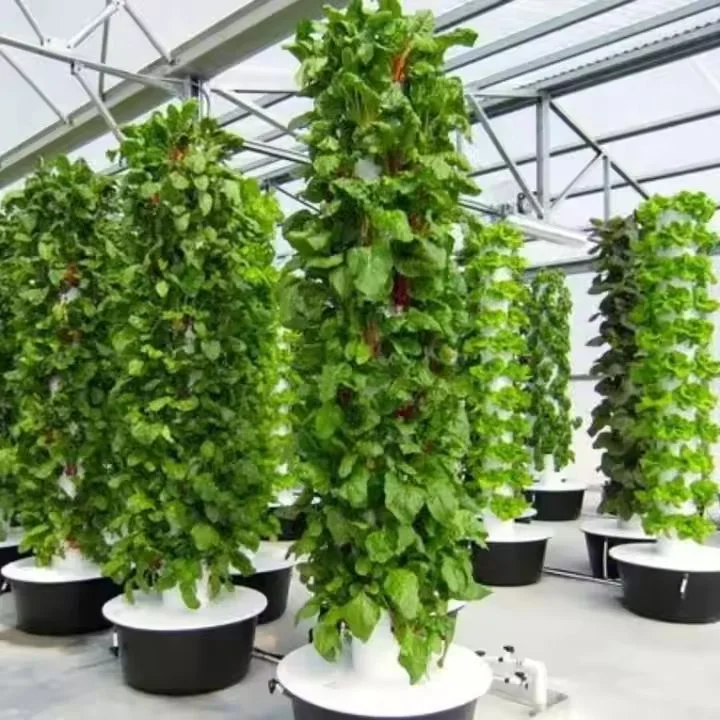
System selection is a critical decision point. Aeroponic tower systems, for example, offer high space efficiency and low water consumption, making them well-suited for high-value crops in space-constrained environments. Hydroponic channel systems offer different trade-offs in terms of crop variety, throughput, and management complexity. The right system depends on the specific crops, production volumes, and facility constraints of each operation.
Buyers and operators evaluating indoor farming infrastructure should assess systems based on their ability to deliver consistent, scalable output with minimal resource inputs — not just on initial cost. The long-term value of indoor farming lies in its structural independence from the land, water, and climate dependencies that constrain traditional agriculture.
FAQ
How does indoor farming reduce the need for large areas of arable land?
Indoor farming uses vertical growing configurations and soilless systems to produce crops within compact, controlled structures. By stacking growing layers vertically and eliminating soil as a growing medium, indoor farming can achieve high output per square meter of facility footprint — requiring a fraction of the land area that equivalent field production would demand. This makes indoor farming viable on land that has no agricultural value, including urban sites, brownfields, and arid terrain.
Does indoor farming completely eliminate water dependency?
Indoor farming does not eliminate water use, but it dramatically reduces it compared to traditional irrigation. Closed-loop systems recirculate water and nutrient solutions, capturing transpiration and reusing what plants do not absorb. This typically results in water consumption that is significantly lower than open-field irrigation for equivalent crop output. The system also removes dependency on rainfall and regional hydrology, making water management predictable and climate-independent.
Can indoor farming be established in locations without fertile soil?
Yes. Because indoor farming uses hydroponic, aeroponic, or substrate-based growing systems, the quality of the underlying land is irrelevant to production performance. Facilities can be built on concrete, contaminated land, rooftops, or in desert environments. Nutrients are delivered directly to plant roots through engineered systems, so soil fertility is not a factor in crop success. This is one of the core ways indoor farming reduces dependency on traditional farmland resources.
Is indoor farming suitable for large-scale commercial food production?
Indoor farming is increasingly used for commercial-scale production of leafy greens, herbs, microgreens, and certain fruiting crops. The scalability of indoor farming depends on system design, facility size, and crop selection. While it is not yet a direct replacement for all categories of field agriculture, it is a commercially viable and growing segment for high-value crops where consistency, proximity to market, and year-round supply are priorities. Advances in lighting efficiency and automation are continuing to improve the economics of large-scale indoor farming operations.