
 EN
EN



Urban indoor farming is no longer a niche experiment — it has become a practical response to shrinking living spaces, rising food costs, and the growing demand for locally grown produce. At the center of this shift is the vertical hydroponic system, a design-forward growing method that fundamentally changes how growers think about available space. Rather than spreading crops across a wide horizontal footprint, this approach stacks growing layers upward, turning unused vertical space into productive growing real estate.
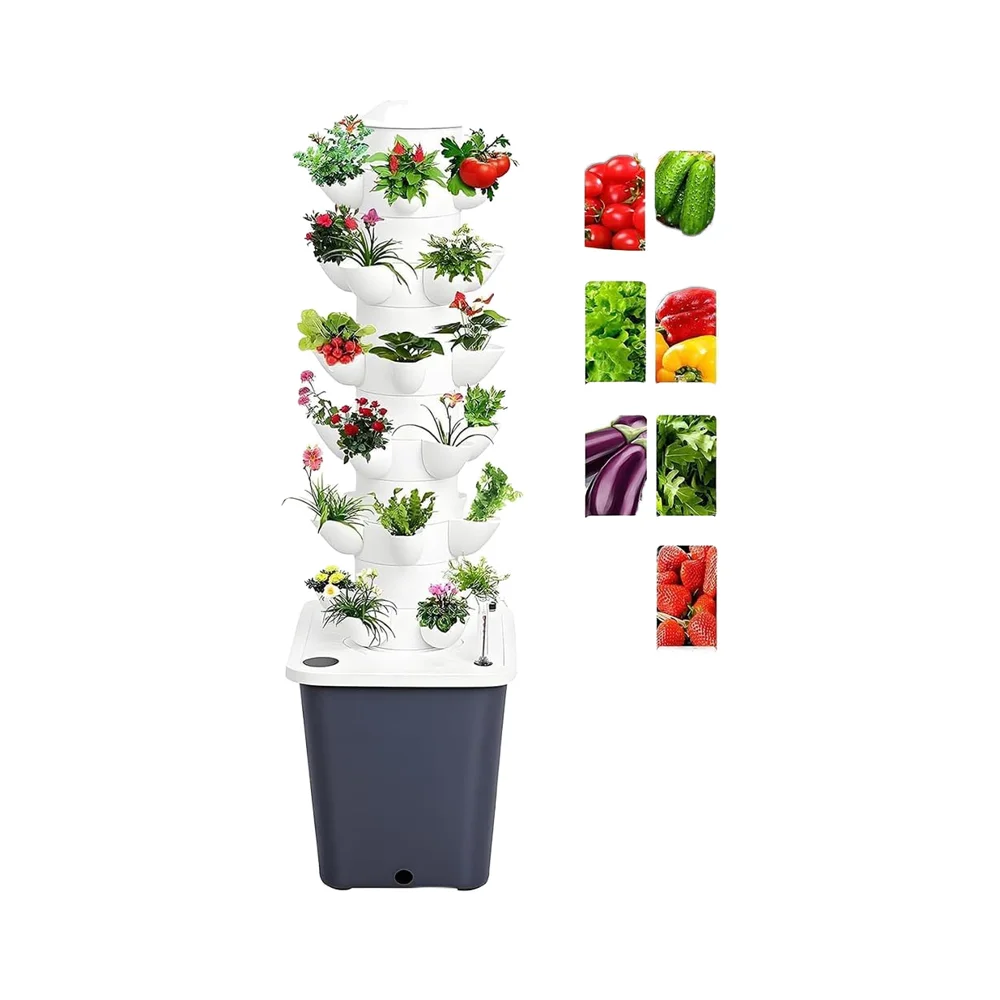
Understanding how a vertical hydroponic system improves space efficiency requires looking beyond the obvious visual of stacked tiers. The real gains come from a combination of structural design, nutrient delivery logic, lighting optimization, and modular scalability — all of which work together to extract maximum yield from minimum floor area. For urban growers operating in apartments, rooftops, warehouses, or compact commercial spaces, these efficiency gains are not just convenient — they are essential to making indoor farming economically viable.
The Core Mechanism Behind Vertical Space Utilization
Replacing Horizontal Spread with Vertical Layers
Traditional soil-based gardening and even flat hydroponic setups require significant floor space per plant. A vertical hydroponic system inverts this logic by organizing growing pods into stacked columns or tiered frames. Each layer holds multiple plant sites, and because the structure grows upward rather than outward, the same square footage that once supported a single row of plants can now support five, six, or even more growing levels.
This vertical stacking is not simply about fitting more plants into a room. It is about restructuring the entire spatial relationship between the grower and the growing environment. Walls, corners, and ceiling height — spaces that are typically wasted in conventional setups — become active contributors to total plant capacity. In a compact urban apartment or a small commercial unit, this transformation can multiply usable growing area by several times without any expansion of the physical footprint.
The structural rigidity of a well-engineered vertical hydroponic system also matters here. High-rigidity frames ensure that multiple loaded tiers remain stable and safe over time, which is especially important in indoor environments where structural failure would damage both the crop and the surrounding space. A robust frame design allows growers to confidently maximize tier count without compromising safety or plant access.
Pod Density and Growing Site Optimization
Beyond the vertical dimension, a vertical hydroponic system also improves space efficiency through high pod density within each tier. Growing pods are arranged in tight, organized patterns that eliminate the wasted spacing typical of soil-based rows. Because roots are suspended in nutrient solution rather than spreading through soil, each plant occupies only the space it actually needs above the waterline.
A system with 30 pods distributed across six layers, for example, delivers a plant density that would be physically impossible to replicate in a soil garden of the same footprint. Each pod position is precisely engineered to allow adequate airflow and light exposure while keeping the overall structure compact. This kind of spatial precision is one of the defining advantages of a vertical hydroponic system over traditional growing methods in urban settings.
How Nutrient Delivery Supports Compact Growing
Centralized Water and Nutrient Circulation
One of the reasons a vertical hydroponic system can pack so many plants into a small area is that it eliminates the need for individual soil volumes per plant. Instead, a centralized water pump circulates nutrient-rich solution through the entire system, reaching every pod through a shared delivery network. This centralized approach removes the bulk and weight of soil from the equation entirely, which is a significant factor in urban environments where floor load limits and storage constraints are real concerns.
The water pump in a vertical hydroponic system is typically compact and energy-efficient, designed to maintain consistent nutrient flow across all tiers without requiring a large reservoir footprint. Because the system recirculates water rather than allowing it to drain away, it also uses significantly less water than soil-based alternatives — an important consideration in urban settings where water costs and conservation matter.
Timer-controlled pump cycles add another layer of efficiency. By automating nutrient delivery intervals, growers avoid the need for constant manual attention, which reduces labor time and ensures that plants receive consistent nutrition regardless of the grower's schedule. This automation is particularly valuable in commercial urban farming operations where labor efficiency directly affects profitability.
Root Zone Efficiency in a Soilless Environment
In a vertical hydroponic system, the root zone is contained within the pod structure itself, suspended above or submerged in the nutrient solution depending on the system design. This containment means that roots do not compete for lateral space the way they do in soil, and there is no risk of root systems from adjacent plants interfering with each other. The result is a cleaner, more predictable growing environment where spatial boundaries between plants are clearly defined.
This root zone efficiency also means that plants in a vertical hydroponic system tend to reach maturity faster than their soil-grown counterparts. Faster growth cycles translate directly into higher turnover per square foot of growing space, which is another dimension of space efficiency that is easy to overlook when focusing only on physical footprint. More harvests per year from the same structure means the effective productivity of the space is multiplied beyond what the pod count alone suggests.
Lighting Efficiency in a Vertical Growing Structure
Maximizing Light Distribution Across Tiers
Light management is one of the most technically demanding aspects of indoor farming, and a vertical hydroponic system is designed with this challenge in mind. Because plants are stacked vertically, light must reach multiple levels simultaneously without creating deep shadow zones on lower tiers. Well-designed vertical systems address this through reflective surfaces, open-frame structures that allow light to penetrate between layers, and strategic placement of grow lights at multiple heights.
In a compact urban setup, the ability to use a single lighting installation to serve multiple growing tiers is a significant space and cost efficiency. Rather than running separate lighting rigs for separate flat growing areas, a vertical hydroponic system consolidates the light source requirement relative to the number of plants being served. This consolidation reduces the infrastructure footprint of the lighting system itself, freeing up more of the available space for actual growing.
Natural Light Integration in Urban Environments
For urban growers with access to windows, balconies, or rooftop spaces, a vertical hydroponic system can be positioned to take advantage of natural light while supplementing with artificial sources only where needed. The vertical orientation of the structure allows it to be placed close to a light source — such as a south-facing window — with each tier receiving a portion of the available natural light. This hybrid approach reduces energy consumption while maintaining the high plant density that makes the system space-efficient.
Outdoor-compatible vertical hydroponic systems extend this advantage further by allowing growers to use fully natural light in suitable climates or seasons. The modular nature of many vertical systems means that the same structure can be used indoors during colder months and moved outdoors when conditions allow, giving urban growers flexibility without requiring separate equipment for each environment.
Modular Design and Scalable Space Planning
Starting Small and Expanding Vertically
A key feature of a well-designed vertical hydroponic system is its modularity. Rather than committing to a fixed installation size, growers can start with a single unit and add more as their space, budget, or production goals evolve. This scalability is particularly well-suited to urban environments where available space may change over time — a grower who starts in a small apartment may later move to a larger space and want to expand their setup without replacing their existing equipment.
Modular vertical hydroponic systems also allow growers to configure their layout to fit irregular spaces. A narrow corridor, an underutilized corner, or a wall section that would otherwise serve no productive purpose can be fitted with a vertical unit that contributes meaningfully to total growing capacity. This adaptability is one of the reasons the vertical hydroponic system has become a preferred choice for urban growers who need to work creatively within constrained environments.
Space Planning for Commercial Urban Farms
In commercial urban farming contexts, the space efficiency of a vertical hydroponic system translates directly into financial performance. Rent per square foot in urban areas is typically high, and any technology that increases yield per square foot reduces the effective cost of production. A commercial operator who can grow three times as many plants in the same leased space as a conventional setup is operating with a fundamentally different cost structure.
Planning a commercial vertical hydroponic system layout involves calculating not just the number of units that fit in the space, but also the workflow paths needed for planting, maintenance, and harvesting. A well-planned layout ensures that the density gains of the vertical system are not offset by inefficient access patterns. Aisle widths, unit spacing, and tier height all factor into a layout that is both maximally productive and practically manageable for the people working in it.
The one-year warranty and modular design of quality vertical hydroponic systems also reduce the financial risk of scaling up. Growers can invest incrementally, validate their production model at each stage, and expand with confidence rather than committing large capital to a fixed installation before the business case is fully proven.
Practical Space Efficiency Outcomes for Urban Growers
Measurable Gains in Plant Capacity per Square Foot
The space efficiency of a vertical hydroponic system is not abstract — it is measurable in concrete terms. A single six-layer unit with 30 pods occupies a footprint that might be less than one square meter, yet it supports 30 individual plants simultaneously. Compared to a soil garden of the same footprint, which might support five to eight plants depending on species, the difference in plant density is dramatic and immediately visible.
For leafy greens, herbs, and other fast-growing crops that are well-suited to hydroponic cultivation, this density advantage compounds over time. Multiple harvest cycles per year from a high-density vertical hydroponic system can produce a volume of food that would require many times the floor space to replicate in a conventional growing setup. For urban growers with limited space, this productivity multiplier is the central value proposition of the vertical approach.
Reducing the Non-Growing Footprint
Space efficiency in urban indoor farming is not only about maximizing the number of plants — it is also about minimizing the space consumed by non-growing infrastructure. A vertical hydroponic system consolidates the reservoir, pump, timer, and growing structure into a single integrated unit, which means there are fewer separate components taking up floor space. This integration keeps the overall system footprint tight and predictable, making it easier to plan a clean, organized growing environment.
The black base design common in quality vertical hydroponic systems also serves a practical purpose beyond aesthetics. A stable, well-designed base keeps the structure secure on flat indoor surfaces without requiring wall mounting or additional anchoring hardware, which simplifies installation and preserves wall space for other uses. This attention to the total spatial footprint of the system — not just the growing area — reflects a design philosophy that takes urban space constraints seriously.
FAQ
How many plants can a vertical hydroponic system support in a small apartment?
The number of plants depends on the specific unit, but a six-layer vertical hydroponic system with 30 pods can support 30 plants simultaneously in a footprint of roughly one square meter or less. This makes it highly practical for apartment growers who want meaningful food production without dedicating significant floor space to the setup.
What types of plants grow best in a vertical hydroponic system for urban use?
Leafy greens such as lettuce, spinach, and kale are among the most productive choices for a vertical hydroponic system in urban settings. Herbs like basil, mint, and cilantro also perform very well. These crops have compact root systems, fast growth cycles, and high demand in household and commercial kitchens, making them ideal for maximizing the space efficiency of a vertical setup.
Does a vertical hydroponic system require a lot of maintenance in an indoor environment?
A well-designed vertical hydroponic system with a built-in water pump and timer requires relatively low daily maintenance. The automated nutrient delivery cycle handles the most time-sensitive task, and the main ongoing responsibilities are monitoring nutrient solution levels, checking pH, and harvesting mature plants. Compared to soil gardening, the absence of weeding, soil amendment, and pest management from soil contact significantly reduces the overall maintenance burden.
Can a vertical hydroponic system be used both indoors and outdoors in an urban setting?
Yes, modular vertical hydroponic systems designed for both indoor and outdoor use give urban growers the flexibility to move their setup based on season, available light, and space. Outdoors, the system benefits from natural sunlight and ventilation, while indoors it can be supplemented with grow lights. This dual-use capability extends the productive season and allows growers to optimize their environment without investing in separate equipment for each setting.
Table of Contents
- The Core Mechanism Behind Vertical Space Utilization
- How Nutrient Delivery Supports Compact Growing
- Lighting Efficiency in a Vertical Growing Structure
- Modular Design and Scalable Space Planning
- Practical Space Efficiency Outcomes for Urban Growers
-
FAQ
- How many plants can a vertical hydroponic system support in a small apartment?
- What types of plants grow best in a vertical hydroponic system for urban use?
- Does a vertical hydroponic system require a lot of maintenance in an indoor environment?
- Can a vertical hydroponic system be used both indoors and outdoors in an urban setting?