
 EN
EN



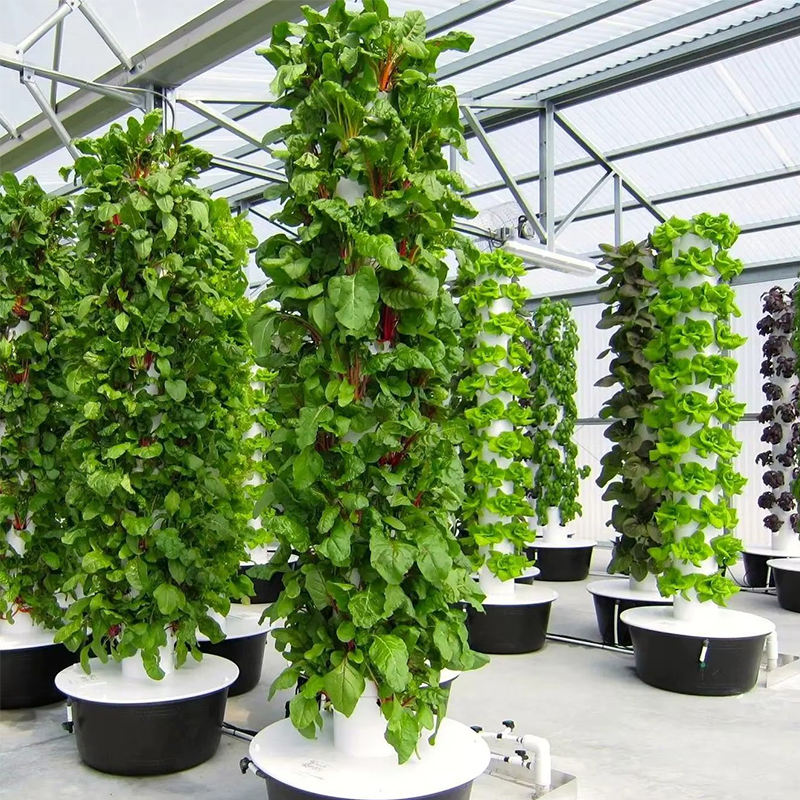
For centuries, agriculture has been defined by its relationship with horizontal land — wide fields, seasonal cycles, and geography-dependent yields. That relationship is now being fundamentally challenged. verticle farming introduces a radically different spatial logic, one that stacks growing layers upward rather than spreading outward, and in doing so, it forces a rethinking of how agricultural land is allocated, valued, and used across both urban and rural contexts.
The implications of verticle farming on land use patterns are not merely technical — they are structural. As food systems face mounting pressure from urbanization, climate volatility, and shrinking arable land, verticle farming offers a model that decouples food production from traditional soil-based geography. Understanding how this reshaping occurs requires examining the spatial, economic, and systemic dimensions of how verticle farming interacts with existing land use frameworks.
The Spatial Logic Behind Verticle Farming
From Horizontal Expansion to Vertical Density
Traditional agriculture operates on a simple spatial premise: more food requires more land. This horizontal expansion model has driven deforestation, wetland conversion, and the encroachment of farms into ecologically sensitive zones for generations. Verticle farming breaks this premise entirely by introducing vertical density as the primary growth variable.
In a verticle farming system, growing layers are stacked within a controlled indoor environment, meaning that a single footprint of land can yield the productive equivalent of many times its surface area. A facility occupying a few thousand square meters can, depending on crop type and system design, produce volumes that would traditionally require many hectares of open field. This compression of productive capacity into a smaller footprint is the foundational mechanism through which verticle farming reshapes land use.
The spatial efficiency of verticle farming also changes how planners and investors think about agricultural zoning. Land that was previously considered unsuitable for farming — urban lots, industrial brownfields, rooftops, or repurposed warehouses — becomes viable production space. This opens entirely new categories of land for food production that were never part of the traditional agricultural land inventory.
Proximity to Consumption as a Land Use Driver
One of the most significant spatial shifts driven by verticle farming is the ability to locate food production close to — or directly within — population centers. Traditional agriculture is geographically constrained by soil quality, climate, and water availability, which typically places farms far from urban consumers. Verticle farming removes these constraints, allowing production to occur wherever infrastructure and energy are available.
This proximity principle reshapes land use patterns at the urban fringe and within city boundaries. Rather than dedicating periurban land to logistics and cold storage for food transported from distant farms, verticle farming enables that same land to host actual production. The supply chain shrinks, and the land use map changes accordingly. Verticle farming effectively redistributes agricultural activity from rural peripheries toward urban cores, altering the spatial distribution of food system infrastructure.
For city planners and real estate developers, this shift introduces verticle farming as a legitimate land use category in urban master plans — something that was largely absent from planning frameworks even a decade ago. The integration of verticle farming into mixed-use developments, industrial parks, and commercial zones is already being observed in forward-looking cities, signaling a structural change in how urban land is categorized and utilized.
Impact on Rural and Peri-Urban Agricultural Land
Reducing Pressure on Marginal and Sensitive Land
One of the most consequential ways verticle farming reshapes traditional land use patterns is by reducing the agricultural pressure on marginal land. Marginal land — areas with poor soil, irregular rainfall, or difficult terrain — has historically been brought into production during periods of high food demand, often at significant environmental cost. Verticle farming, by producing high yields in controlled environments, can substitute for some of this marginal land cultivation.
As verticle farming scales, the economic case for converting marginal land weakens. If leafy greens, herbs, and certain fruiting crops can be produced more reliably and profitably in a verticle farming facility, the incentive to clear additional land for those crops diminishes. This dynamic has the potential to slow the agricultural frontier expansion that has been a primary driver of habitat loss and soil degradation globally.
The effect is not uniform across all crop categories. Verticle farming is currently most competitive for high-value, fast-cycling crops such as lettuce, spinach, microgreens, and herbs. Staple crops like wheat, rice, and maize remain economically impractical for verticle farming at scale. This means the land use reshaping driven by verticle farming is selective — it targets specific segments of the agricultural land portfolio rather than replacing all conventional farming.
Changing the Value Equation for Agricultural Land
The rise of verticle farming also introduces new variables into how agricultural land is valued. Traditionally, land value in agriculture is tied to soil quality, water rights, climate suitability, and proximity to transport infrastructure. Verticle farming decouples production value from these soil-based factors, which has downstream effects on how agricultural land is priced and traded.
In regions where verticle farming becomes a dominant production method for certain crops, the premium historically placed on fertile agricultural land for those crops may erode. Conversely, land suitable for verticle farming facilities — meaning land with reliable power access, proximity to urban markets, and appropriate zoning — gains new agricultural relevance regardless of its soil characteristics. This represents a fundamental reordering of the land value hierarchy that has governed agricultural real estate for centuries.
For landowners, investors, and agricultural policymakers, this shift requires new frameworks for assessing land utility. The traditional metrics of soil classification and rainfall averages become less relevant when evaluating land for verticle farming purposes, while infrastructure access and urban proximity move to the forefront of the valuation calculus.
Verticle Farming and Urban Land Use Transformation
Repurposing Underutilized Urban Structures
Verticle farming has a unique capacity to activate underutilized urban structures for productive agricultural use. Vacant warehouses, decommissioned factories, underused retail spaces, and even multi-story car parks have been converted into verticle farming facilities in various cities. This adaptive reuse pattern represents a meaningful shift in urban land use, transforming economically dormant assets into active food production nodes.
From a land use planning perspective, this is significant because it introduces agricultural productivity into the urban fabric without requiring new land development. The land footprint of verticle farming in urban settings is often zero in the sense of greenfield development — it occupies existing built structures rather than converting undeveloped land. This makes verticle farming a particularly attractive option for cities seeking to improve food security without expanding their physical boundaries.
The integration of verticle farming into urban structures also creates new mixed-use typologies. Buildings that combine retail, residential, and verticle farming functions are emerging as a distinct architectural and planning category. These hybrid structures reflect a broader trend toward productive urbanism, where cities are designed not just for consumption and habitation but also for food production — a concept that verticle farming makes physically and economically feasible.
Zoning, Policy, and the Formalization of Verticle Farming Land Use
The reshaping of land use patterns by verticle farming is not purely market-driven — it is also being shaped by regulatory and policy responses. Many municipalities are updating their zoning codes to formally recognize verticle farming as a permitted land use in commercial, industrial, and even residential zones. This regulatory evolution formalizes the spatial transformation that verticle farming is driving and creates the legal framework for its continued expansion.
Policy incentives such as tax credits for urban agriculture, grants for food desert mitigation, and sustainability-linked development approvals are accelerating the adoption of verticle farming in urban land use plans. These policy levers reflect a growing recognition among planners and governments that verticle farming is not a niche experiment but a legitimate and scalable component of the urban food system infrastructure.
For businesses and investors operating in the verticle farming space, understanding the evolving zoning and policy landscape is essential. The land use permissions available for verticle farming vary significantly by jurisdiction, and navigating these frameworks effectively is a key determinant of site selection, facility design, and operational viability. As more cities formalize verticle farming in their land use codes, the spatial footprint of this production model will continue to grow.
Long-Term Implications for Agricultural Land Use Patterns
A Dual-Track Agricultural Land System
The long-term trajectory suggested by the growth of verticle farming is not the wholesale replacement of conventional agriculture but the emergence of a dual-track land use system. In this model, large-scale conventional farming continues to occupy rural agricultural land for bulk commodity crops, while verticle farming occupies urban and periurban land for high-value, perishable, and specialty crops. These two tracks operate in parallel, each optimized for different crop categories, markets, and land types.
This dual-track model has significant implications for how agricultural land is planned and managed at a regional and national scale. Land use strategies will need to account for both the continued importance of rural farmland and the growing role of urban verticle farming infrastructure. Agricultural policy, land tenure systems, and investment frameworks will all need to evolve to support this more complex and spatially distributed food production landscape.
Verticle farming also introduces new considerations around land use efficiency metrics. Traditional measures such as yield per hectare remain relevant for conventional farming, but verticle farming requires additional metrics — yield per cubic meter, energy efficiency per kilogram of produce, and water use per unit of output — to accurately capture its productive contribution. Integrating these metrics into land use planning frameworks is a necessary step toward a coherent dual-track agricultural land system.
Verticle Farming as a Tool for Land Use Resilience
Beyond efficiency and proximity, verticle farming contributes to land use resilience — the capacity of a land use system to maintain food production under stress conditions. Climate change is increasing the frequency and severity of droughts, floods, and extreme temperature events that disrupt conventional agricultural land use. Verticle farming, operating in climate-controlled environments, is largely insulated from these external shocks, making it a stabilizing element in a more resilient land use portfolio.
For regions facing acute land use pressures — whether from sea level rise, desertification, or urban sprawl consuming farmland — verticle farming offers a pathway to maintain or even expand food production capacity without relying on additional land conversion. This resilience function is increasingly recognized by food security planners and government agencies as a strategic rationale for investing in verticle farming infrastructure.
The resilience argument also applies at the city level. Urban food security strategies that incorporate verticle farming reduce dependence on long supply chains that are vulnerable to disruption. By embedding food production within the urban land use fabric, cities gain a degree of food system autonomy that purely import-dependent urban food systems cannot achieve. Verticle farming, in this context, is not just a production technology — it is a land use strategy for urban resilience.
FAQ
How does verticle farming reduce the need for traditional agricultural land?
Verticle farming produces crops in stacked, controlled indoor environments, achieving high yields from a small physical footprint. This means that the same volume of produce that would require many hectares of conventional farmland can be grown in a fraction of the space. As verticle farming scales for high-value crops, it reduces the demand for new land conversion and can relieve pressure on marginal and ecologically sensitive agricultural land.
Can verticle farming be integrated into urban land use planning?
Yes. Verticle farming is increasingly being incorporated into urban zoning frameworks as a recognized land use category. It can be established in repurposed industrial buildings, commercial spaces, and purpose-built urban facilities. Many cities are updating their planning codes to permit and even incentivize verticle farming in zones where conventional agriculture would never be considered, making it a practical tool for urban food system planning.
Does verticle farming completely replace conventional farmland?
Not entirely. Verticle farming is currently most viable for leafy greens, herbs, and certain specialty crops. Staple crops such as wheat, corn, and rice remain outside the practical scope of verticle farming at commercial scale due to energy and cost constraints. The more accurate picture is a complementary dual-track system where verticle farming handles high-value, perishable crops in urban settings while conventional farming continues to supply bulk commodities from rural land.
What role does verticle farming play in food security and land use resilience?
Verticle farming strengthens food security by enabling production close to consumption centers, reducing supply chain vulnerability, and operating independently of climate and soil conditions. From a land use perspective, it provides a resilient production option for cities and regions facing land scarcity, climate disruption, or urban encroachment on farmland. By embedding food production within the urban land use fabric, verticle farming contributes to a more robust and adaptable food system.