
 EN
EN


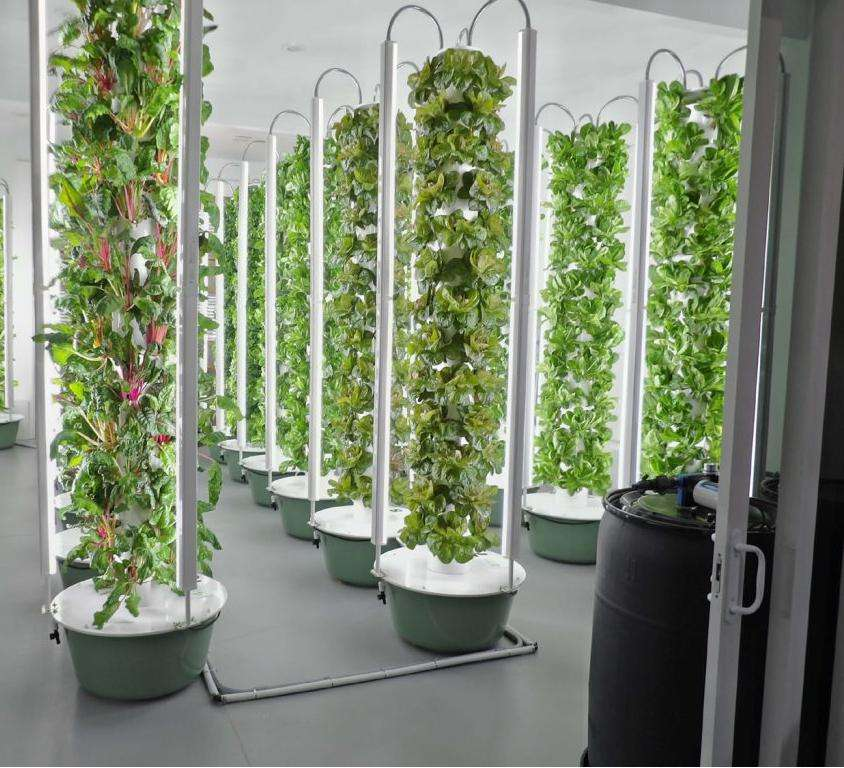
The hydroponic tower system has become one of the most recognized growing solutions in modern controlled environment agriculture. As indoor farming, vertical farms, and greenhouse operations continue to expand globally, growers are increasingly turning to this vertical cultivation method to maximize output while minimizing resource consumption. The reasons behind its widespread adoption are rooted in both practical engineering and the fundamental demands of precision agriculture.
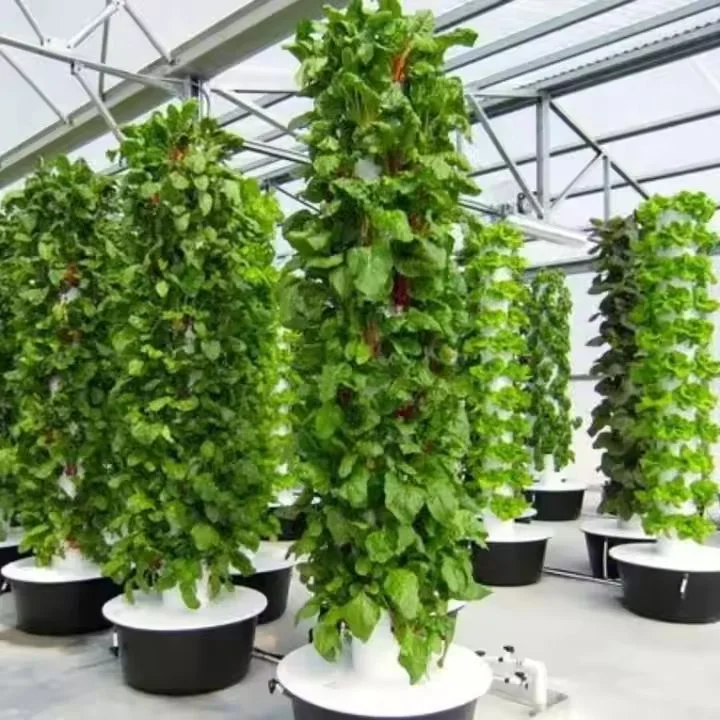
Understanding why the hydroponic tower system is so widely used requires looking at the specific challenges that controlled environment agriculture is designed to solve. Land scarcity, water inefficiency, unpredictable weather, and the growing demand for fresh produce in urban centers have all pushed the industry toward smarter, more compact growing infrastructure. The hydroponic tower system addresses each of these pressures in a way that few other cultivation formats can match, making it a cornerstone technology in modern indoor and greenhouse farming operations.
The Core Advantages That Drive Adoption
Vertical Space Utilization in Controlled Environments
One of the primary reasons the hydroponic tower system is so widely used in controlled environment agriculture is its ability to exploit vertical space. Traditional soil-based farming is inherently horizontal, requiring large land areas to produce meaningful yields. In a controlled environment such as a greenhouse or indoor vertical farm, floor space is expensive and limited. The hydroponic tower system solves this by stacking growing sites vertically, allowing operators to multiply their productive capacity without expanding their footprint.
A single hydroponic tower system column can support dozens of individual plant sites within a compact vertical profile. When multiple towers are arranged in rows under optimized lighting, the density of production per square meter increases dramatically compared to conventional growing methods. This spatial efficiency is not just a convenience — it is a fundamental economic driver that makes controlled environment agriculture viable at commercial scale.
For urban farms, rooftop installations, and warehouse conversions, the hydroponic tower system is often the only format that makes the numbers work. The ability to grow upward rather than outward transforms otherwise unusable spaces into productive agricultural assets, which is a key reason for its rapid adoption across diverse facility types.
Compatibility with Precision Environmental Control
Controlled environment agriculture is defined by the ability to regulate temperature, humidity, light, CO2 levels, and nutrient delivery with precision. The hydroponic tower system is architecturally well-suited to this kind of management. Because plants are grown in a soilless, recirculating nutrient solution, growers have direct and immediate control over what each plant receives at the root zone. This eliminates the variability introduced by soil composition, drainage inconsistency, and microbial unpredictability.
The vertical orientation of the hydroponic tower system also integrates naturally with overhead or side-mounted grow lighting systems. LED arrays can be positioned to deliver uniform photon distribution across all growing sites on each tower, ensuring that light — one of the most critical variables in plant development — is managed as precisely as nutrients and water. This compatibility with full-spectrum environmental control is a major reason why controlled environment agriculture operators prefer the hydroponic tower system over other formats.
Water and Nutrient Efficiency in Closed-Loop Systems
Recirculating Nutrient Delivery
Water scarcity is one of the defining challenges of 21st-century agriculture, and the hydroponic tower system directly addresses this through its closed-loop recirculating design. In a typical hydroponic tower system, nutrient-enriched water is pumped from a reservoir to the top of each tower and flows downward past the root zones of all plants before returning to the reservoir for reuse. This recirculating mechanism means that water is not lost to soil absorption or surface evaporation in the way it would be in conventional farming.
Studies and operational data from commercial vertical farms consistently show that hydroponic systems use significantly less water than soil-based equivalents for the same crop output. The hydroponic tower system, with its continuous recirculation, represents one of the most water-efficient configurations available. For controlled environment agriculture operations that are located in water-stressed regions or that face strict environmental compliance requirements, this efficiency is not optional — it is a business necessity.
Nutrient management follows the same logic. Because the hydroponic tower system delivers nutrients directly to the root zone in a controlled solution, there is minimal nutrient runoff or leaching. Growers can monitor and adjust nutrient concentrations in real time, reducing waste and ensuring that plants receive exactly what they need at each growth stage. This level of precision is simply not achievable in soil-based systems at scale.
Aeroponics Integration for Enhanced Root Oxygenation
Many advanced versions of the hydroponic tower system incorporate aeroponic delivery mechanisms, where nutrient solution is misted directly onto exposed root zones rather than flowing continuously. This approach maximizes oxygen availability at the roots, which is a critical factor in plant health and growth rate. In a controlled environment where every variable is managed, root zone oxygenation is one of the most impactful levers available to growers.
The aeroponic hydroponic tower system is particularly effective for fast-growing leafy vegetables, herbs, and microgreens — crops that are in high demand in urban food markets and that benefit most from accelerated growth cycles. By combining vertical tower architecture with aeroponic nutrient delivery, operators can achieve harvest cycles that are significantly shorter than those possible in soil or even in other hydroponic configurations.
This performance advantage compounds over time. Faster cycles mean more harvests per year, which translates directly into higher revenue per square meter of facility space. For controlled environment agriculture businesses operating on tight margins, the productivity gains offered by an aeroponic hydroponic tower system can be the difference between a viable and an unviable operation.
Scalability and Operational Flexibility
Modular Design for Phased Expansion
The hydroponic tower system is inherently modular. Individual towers can be added, removed, or reconfigured without disrupting the rest of the growing operation. This modularity is a significant operational advantage in controlled environment agriculture, where business conditions, crop mixes, and market demands can change rapidly. A grower can start with a small installation and scale up incrementally as revenue and demand justify the investment.
This phased expansion capability reduces the capital risk associated with entering controlled environment agriculture. Rather than committing to a fully built-out facility from day one, operators can deploy a hydroponic tower system at a manageable scale, validate their production model, and then expand with confidence. The infrastructure investment grows in proportion to demonstrated business performance, which is a financially prudent approach that has made the hydroponic tower system accessible to a wider range of operators.
Modularity also supports crop diversification. Different towers within the same facility can be configured for different crops, nutrient formulations, or growth stages simultaneously. This flexibility allows controlled environment agriculture operators to respond to market signals and seasonal demand patterns without overhauling their entire production system.
Integration with Automation and Monitoring Technologies
Modern controlled environment agriculture increasingly relies on automation for nutrient dosing, climate control, lighting schedules, and harvest logistics. The hydroponic tower system is well-suited to automation integration because its recirculating nutrient system can be connected to automated dosing and monitoring equipment with relative ease. Sensors placed in the nutrient reservoir can continuously track pH, electrical conductivity, dissolved oxygen, and temperature, feeding data to control systems that make real-time adjustments.
Lighting systems paired with the hydroponic tower system can be programmed to deliver precise photoperiods tailored to each crop variety, further optimizing growth rates and quality. As the cost of sensors, actuators, and control software continues to decline, the economic case for automating a hydroponic tower system operation becomes increasingly compelling. Automation reduces labor costs, minimizes human error, and enables consistent crop quality — all of which are critical in commercial controlled environment agriculture.
The data generated by an automated hydroponic tower system also has long-term value. Growers who track environmental and production variables over multiple crop cycles can identify optimization opportunities, predict yield outcomes, and build proprietary growing protocols that become competitive advantages. This data-driven approach to farming is one of the defining characteristics of advanced controlled environment agriculture, and the hydroponic tower system is a natural fit for it.
Crop Quality, Food Safety, and Market Positioning
Consistent Crop Quality in a Controlled Setting
One of the most commercially important reasons for the widespread use of the hydroponic tower system in controlled environment agriculture is the consistency of crop quality it enables. When plants are grown in a precisely managed environment with controlled nutrient delivery, the variability that characterizes field-grown produce is largely eliminated. Leaf size, color, texture, flavor profile, and nutritional content can be maintained within tight tolerances across every harvest cycle.
This consistency is highly valued by retail buyers, food service operators, and institutional purchasers who require predictable product specifications. A controlled environment agriculture operation using a hydroponic tower system can offer supply contracts with quality guarantees that field growers simply cannot match. This market positioning advantage is a direct consequence of the system's ability to remove environmental variability from the production equation.
For premium market segments — organic retailers, high-end restaurants, hospital food programs — the ability to deliver consistently high-quality produce year-round is a significant commercial differentiator. The hydroponic tower system, operating within a controlled environment, is one of the most reliable ways to achieve and maintain that standard.
Reduced Pesticide Use and Enhanced Food Safety
Controlled environment agriculture using a hydroponic tower system dramatically reduces exposure to the pest and disease pressures that drive pesticide use in conventional farming. When crops are grown indoors or in enclosed greenhouses, the vectors for pest introduction are limited and manageable. The absence of soil eliminates a major reservoir for soil-borne pathogens, and the controlled airflow in a well-designed facility reduces the risk of fungal disease spread.
The result is that hydroponic tower system operations in controlled environments can often produce crops with minimal or zero pesticide application. This is a powerful selling point in markets where consumer demand for clean-label, pesticide-free produce is growing. It also reduces the regulatory and liability exposure associated with pesticide residue compliance, which is an increasingly complex area for conventional growers.
Food safety traceability is also enhanced in a hydroponic tower system environment. Because every input — water, nutrients, seeds, growing media — is documented and controlled, the chain of custody for each crop is clear and auditable. This traceability is becoming a baseline requirement for major retail and food service buyers, and controlled environment agriculture operations built around the hydroponic tower system are well-positioned to meet it.
FAQ
What types of crops are best suited for a hydroponic tower system in controlled environment agriculture?
Leafy greens such as lettuce, spinach, kale, and arugula are among the most productive crops for a hydroponic tower system. Herbs like basil, cilantro, and mint also perform exceptionally well. These crops have relatively shallow root systems, fast growth cycles, and high market value per square meter, making them ideal for the vertical, high-density format of the hydroponic tower system in a controlled environment.
How does a hydroponic tower system compare to traditional greenhouse growing in terms of water use?
A hydroponic tower system typically uses a fraction of the water required by traditional greenhouse growing with soil or substrate. The recirculating nutrient delivery design means that water is continuously reused rather than lost to drainage or evaporation. In practice, a well-managed hydroponic tower system can reduce water consumption by a substantial margin compared to conventional greenhouse methods, making it a more sustainable choice for water-conscious operations.
Is a hydroponic tower system suitable for large-scale commercial production?
Yes, the hydroponic tower system is well-suited to large-scale commercial production, particularly in controlled environment agriculture facilities such as vertical farms and commercial greenhouses. Its modular design allows for scalable deployment, and its compatibility with automation systems makes it practical to manage at high volumes. Many commercial operators have successfully built profitable businesses around the hydroponic tower system at scales ranging from small urban farms to large warehouse-based vertical farming operations.
What are the key maintenance requirements for a hydroponic tower system?
Regular maintenance of a hydroponic tower system includes monitoring and adjusting nutrient solution pH and electrical conductivity, cleaning the recirculating system to prevent biofilm and mineral buildup, inspecting pumps and irrigation lines for blockages, and managing the growing environment to prevent pest and disease introduction. In a controlled environment agriculture setting, these tasks are often partially automated, but routine manual inspection remains important to catch issues early and maintain consistent crop performance.
Table of Contents
- The Core Advantages That Drive Adoption
- Water and Nutrient Efficiency in Closed-Loop Systems
- Scalability and Operational Flexibility
- Crop Quality, Food Safety, and Market Positioning
-
FAQ
- What types of crops are best suited for a hydroponic tower system in controlled environment agriculture?
- How does a hydroponic tower system compare to traditional greenhouse growing in terms of water use?
- Is a hydroponic tower system suitable for large-scale commercial production?
- What are the key maintenance requirements for a hydroponic tower system?