
 EN
EN


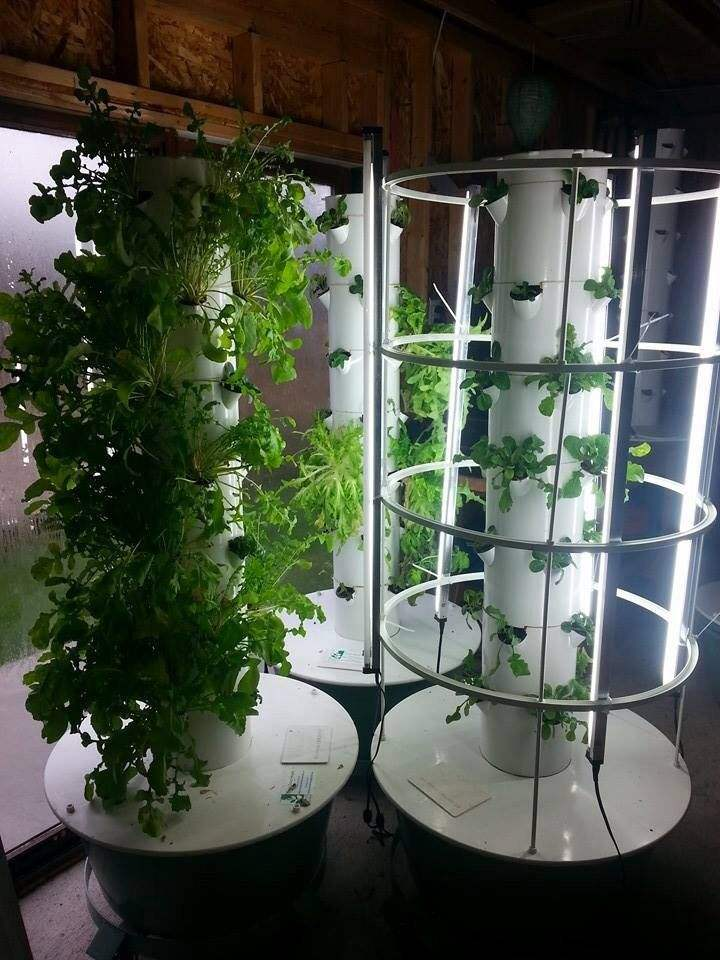
The rise of compact agriculture has pushed designers, urban farmers, and commercial growers to rethink how food production fits into limited physical spaces. Among the solutions gaining serious traction, the hydroponic tower system stands out as one of the most structurally and functionally aligned tools for this purpose. Its vertical orientation, modular construction, and soil-free growing method make it a natural fit for environments where horizontal space is scarce but the demand for fresh produce remains high. Understanding what specifically makes a hydroponic tower system suitable for compact agriculture design models requires looking beyond surface-level appeal and examining the engineering logic, spatial efficiency, and operational flexibility that define its value.
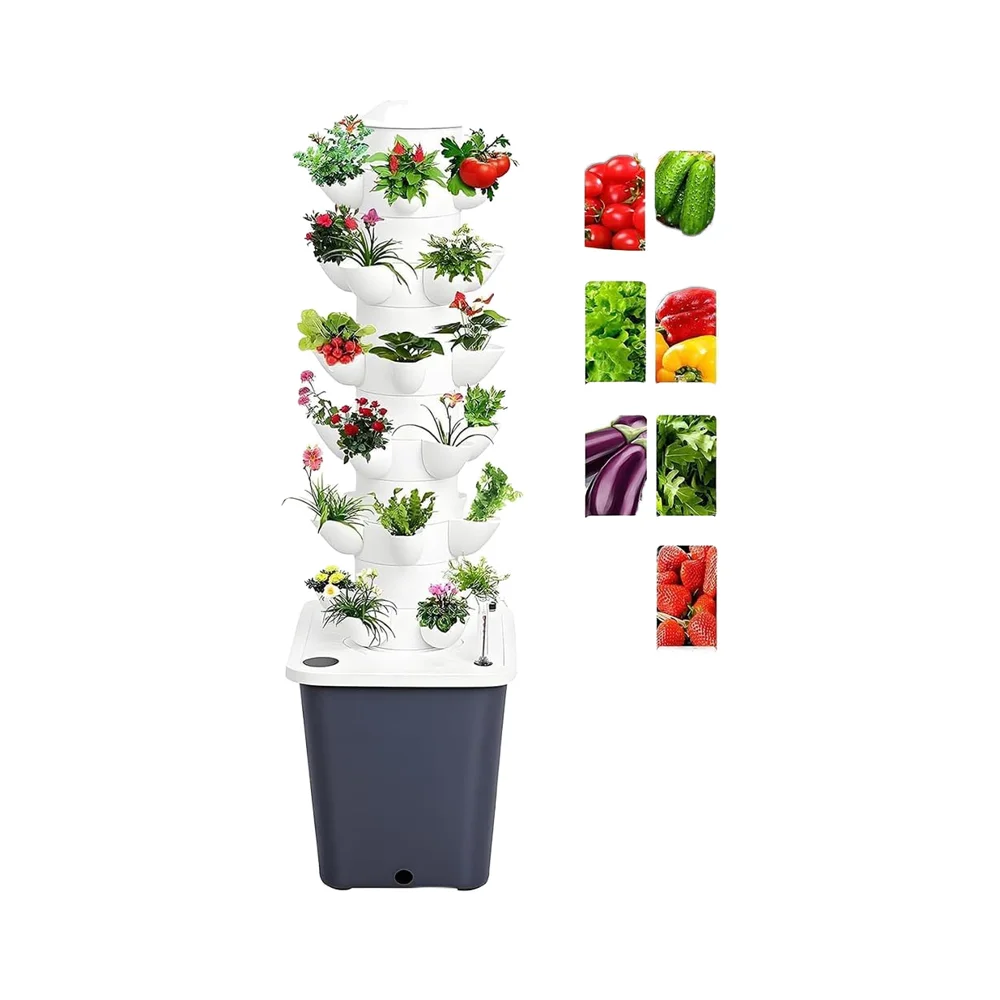
Compact agriculture design models are built around a core constraint: doing more with less. Whether the setting is a rooftop garden, an indoor vertical farm, a school greenhouse, or a commercial micro-farm, the design challenge is always about maximizing yield per square foot while keeping infrastructure manageable. A hydroponic tower system addresses this challenge directly by stacking growing pods vertically, circulating nutrient-rich water through a closed loop, and eliminating the need for soil entirely. This combination of features is not coincidental — it reflects a design philosophy that aligns precisely with what compact agriculture demands.
Vertical Space Utilization and Footprint Efficiency
How Tower Orientation Transforms Growing Density
The most immediate advantage of a hydroponic tower system in compact agriculture is its vertical orientation. Traditional soil-based growing requires horizontal beds, which consume floor space proportionally to the number of plants. A hydroponic tower system inverts this logic by growing upward rather than outward. A single tower unit occupying less than one square foot of floor space can support 20 to 30 individual plant pods depending on the number of layers, delivering a growing density that flat-bed systems simply cannot match in the same footprint.
This vertical stacking is not just a spatial trick — it is a structural design decision that makes the hydroponic tower system inherently compatible with compact environments. Designers working on indoor farms, container agriculture units, or urban rooftop installations can plan their layouts around tower columns rather than sprawling rows. The result is a cleaner, more scalable design model that adapts to irregular or constrained spaces without sacrificing plant capacity.
For compact agriculture design models that must operate within fixed architectural boundaries — such as a building interior or a modular shipping container — the ability to grow vertically is not just convenient, it is essential. The hydroponic tower system provides this capability in a self-contained, structurally stable format that requires no permanent modification to the surrounding space.
Modular Design and Scalable Configuration
Beyond vertical orientation, the modular nature of a hydroponic tower system gives compact agriculture designers a critical planning advantage. Most tower systems are built in stackable layers, allowing operators to start with a smaller configuration and expand upward as production needs grow. This modularity means the system can be right-sized for the available space rather than forcing the space to accommodate a fixed infrastructure.
In compact agriculture design models, scalability without spatial expansion is a key performance criterion. A hydroponic tower system meets this criterion by allowing vertical expansion within the same floor footprint. Adding layers to an existing tower increases plant capacity without requiring additional floor area, which is a significant advantage in environments where every square foot carries a cost or a constraint.
The modular format also simplifies maintenance and reconfiguration. Individual layers or pods can be removed, replaced, or repositioned without dismantling the entire system. This operational flexibility supports the iterative design approach that compact agriculture projects often require, where layouts are adjusted based on crop performance, seasonal changes, or evolving production goals.
Soil-Free Growing and Infrastructure Simplification
Eliminating Soil as a Design Constraint
Soil is one of the most significant infrastructure burdens in traditional agriculture. It is heavy, requires drainage systems, degrades over time, and introduces pest and disease vectors that demand ongoing management. In compact agriculture design models, these burdens are amplified because the physical environment is already constrained. A hydroponic tower system eliminates soil entirely, replacing it with a nutrient solution that circulates through the tower and delivers precisely what each plant needs directly to its root zone.
This soil-free approach dramatically simplifies the infrastructure requirements of a compact growing environment. There is no need for raised beds, drainage channels, or soil amendment programs. The hydroponic tower system operates with a reservoir, a water pump, and a timer — components that are compact, lightweight, and easy to integrate into almost any physical setting. For designers working within tight spatial and structural constraints, this simplicity is a major enabler.
The absence of soil also reduces the weight load on the supporting structure, which is particularly relevant for rooftop installations, elevated platforms, or interior spaces with load-bearing limitations. A hydroponic tower system filled with growing medium and plants is significantly lighter than an equivalent soil-based system, making it viable in locations where traditional agriculture would be structurally impractical.
Closed-Loop Water Efficiency in Constrained Environments
Water management is another area where the hydroponic tower system demonstrates clear suitability for compact agriculture. The closed-loop circulation system recycles water continuously, with the nutrient solution flowing from the reservoir up through the tower and back down again. This recirculation means water consumption is a fraction of what soil-based systems require, with most hydroponic tower systems using up to 90 percent less water than conventional growing methods.
In compact agriculture design models, water efficiency is not just an environmental consideration — it is a practical infrastructure requirement. Compact environments often have limited access to water supply lines, and managing runoff or drainage in an enclosed space can be technically complex. The self-contained water cycle of a hydroponic tower system eliminates these concerns by keeping water within the system and minimizing waste.
The integration of a timer-controlled pump further enhances water efficiency by automating irrigation cycles. This automation reduces the need for manual intervention, which is valuable in compact agriculture settings where labor resources may be limited. The hydroponic tower system effectively manages its own watering schedule, freeing operators to focus on other aspects of production management.
Adaptability to Indoor and Outdoor Compact Settings
Indoor Compatibility and Controlled Environment Agriculture
One of the defining characteristics that makes a hydroponic tower system suitable for compact agriculture design models is its ability to function effectively in both indoor and outdoor environments. Indoor compact agriculture — whether in a warehouse, office building, school, or residential space — requires growing systems that can operate without natural soil and adapt to artificial lighting conditions. The hydroponic tower system is designed for exactly this context.
In indoor settings, the hydroponic tower system integrates seamlessly with LED grow lights, climate control systems, and environmental monitoring tools. The vertical tower format is particularly well-suited to indoor lighting arrangements because it allows light to reach multiple growing levels when positioned correctly. Designers can configure lighting arrays around tower columns to ensure even light distribution across all pods, maximizing photosynthetic efficiency within a compact indoor footprint.
The controlled environment of an indoor compact farm also allows the hydroponic tower system to operate year-round regardless of external climate conditions. This continuous production capability is a significant advantage for compact agriculture models that need to deliver consistent output, whether for commercial supply chains, institutional food programs, or community growing initiatives.
Outdoor Deployment in Urban and Peri-Urban Contexts
Outdoors, the hydroponic tower system adapts equally well to compact agriculture settings such as rooftop gardens, balcony farms, courtyard installations, and peri-urban micro-farms. Its self-contained design means it does not require connection to in-ground irrigation systems or soil preparation, making deployment straightforward even on hard surfaces like concrete or asphalt.
The structural stability of a well-designed hydroponic tower system allows it to withstand outdoor conditions without requiring permanent anchoring or complex support structures. This portability is valuable in compact urban agriculture contexts where installations may need to be temporary, seasonal, or relocatable. A hydroponic tower system can be set up, operated, and moved without leaving a permanent footprint on the site.
For urban agriculture designers working with community gardens, school programs, or commercial micro-farms in dense city environments, the outdoor adaptability of the hydroponic tower system means it can be deployed wherever space becomes available — on a rooftop, in a courtyard, or along a building facade — without requiring the site preparation that traditional growing methods demand.
Crop Suitability and Production Logic for Compact Models
Matching Crop Selection to Tower Growing Conditions
The suitability of a hydroponic tower system for compact agriculture also depends on the crops it supports. Tower systems are particularly well-suited to fast-growing, shallow-rooted crops such as leafy greens, herbs, strawberries, and certain flowering plants. These crops thrive in the nutrient-rich, well-oxygenated root environment that a hydroponic tower system provides, and their compact root structures are compatible with the pod-based growing format.
For compact agriculture design models focused on high-turnover production — such as restaurant supply farms, subscription box operations, or institutional food programs — the fast growth cycles of tower-compatible crops translate directly into production efficiency. A hydroponic tower system can cycle through multiple harvests per year, delivering a continuous supply of fresh produce from a minimal physical footprint.
Designers building compact agriculture models around a hydroponic tower system can plan their crop mix to optimize tower utilization across seasons and production cycles. By selecting crops with complementary growth rates and harvest windows, operators can maintain near-continuous production from each tower unit, maximizing the return on the space and infrastructure investment.
Operational Simplicity Supporting Small-Scale and First-Time Operators
Compact agriculture design models are often implemented by operators who are not large-scale commercial farmers — they may be small business owners, educators, community organizations, or individuals exploring urban food production for the first time. The hydroponic tower system is well-suited to this operator profile because its setup and daily management are straightforward compared to more complex growing systems.
The combination of a water pump, timer, and nutrient reservoir means that once the system is configured, daily management primarily involves monitoring nutrient levels, checking plant health, and harvesting mature crops. There is no soil to till, no complex irrigation infrastructure to maintain, and no heavy equipment required. This operational simplicity makes the hydroponic tower system accessible to a wide range of operators within compact agriculture contexts.
For compact agriculture design models that need to demonstrate viability to stakeholders, funders, or community members, the low operational complexity of a hydroponic tower system is also a communication advantage. The system is visually intuitive, easy to explain, and produces visible results quickly — all of which support adoption and engagement in community or educational agriculture settings.
FAQ
What types of crops grow best in a hydroponic tower system for compact agriculture?
Leafy greens such as lettuce, spinach, and kale are among the most productive crops for a hydroponic tower system in compact settings. Herbs like basil, cilantro, and mint also perform very well. These crops have shallow root systems that fit naturally into tower pods, grow quickly under hydroponic conditions, and can be harvested repeatedly, making them ideal for high-turnover compact agriculture models.
How much space does a hydroponic tower system actually require?
A standard hydroponic tower system typically occupies less than one square foot of floor space while supporting 20 to 30 plant pods depending on the number of layers. This makes it one of the most space-efficient growing formats available. In compact agriculture design models, multiple towers can be arranged in tight grid configurations, dramatically increasing plant density per square foot compared to any horizontal growing method.
Can a hydroponic tower system be used indoors without natural sunlight?
Yes. A hydroponic tower system is fully compatible with artificial lighting, making it suitable for indoor compact agriculture environments that have no access to natural sunlight. LED grow lights designed for plant cultivation can be positioned around or above tower units to provide the full spectrum of light that crops need. Many compact indoor farms rely entirely on artificial lighting with excellent results.
Is a hydroponic tower system difficult to maintain for small-scale operators?
A hydroponic tower system is generally considered one of the more accessible growing systems for small-scale operators. The core maintenance tasks involve monitoring and replenishing the nutrient solution, checking the pump and timer function, and managing plant health. There is no soil management, no heavy irrigation infrastructure, and no complex mechanical systems to service. Most operators can manage a hydroponic tower system effectively with a modest time investment per week.