
 EN
EN


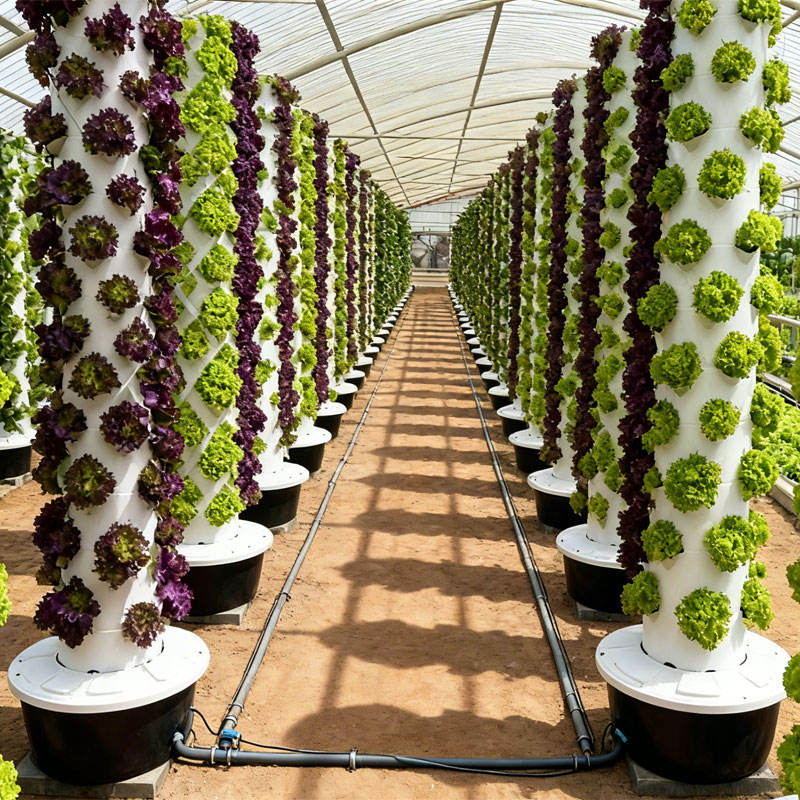
The global conversation around sustainable agriculture is evolving rapidly, and at the center of this shift is a method that challenges everything traditional farming stood for. vertical grow is no longer a niche experiment confined to research labs or urban rooftops — it is becoming a serious pillar in how governments, agribusinesses, and development organizations think about feeding the future. As climate pressure intensifies and arable land continues to shrink, the question is not whether vertical grow matters, but why it is gaining momentum so decisively within sustainable farming frameworks.
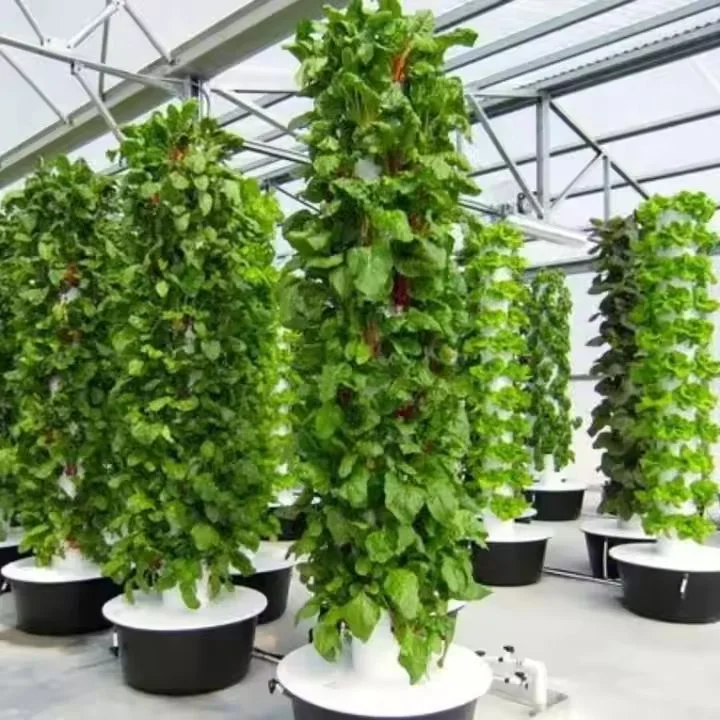
Sustainable farming development models are built around the idea that food production must coexist with ecological responsibility, resource efficiency, and long-term viability. In that context, vertical grow offers a compelling set of answers to some of agriculture's most persistent problems. From reducing water consumption to enabling food production in non-traditional environments, vertical grow aligns strongly with the goals that modern sustainability frameworks demand. Understanding why this alignment is so powerful requires looking closely at how vertical grow functions, what it solves, and where it fits within the broader agricultural transition.
The Resource Efficiency Case for Vertical Grow
Water Conservation as a Core Sustainability Driver
One of the most frequently cited reasons vertical grow earns attention in sustainable development models is its dramatic reduction in water usage. Conventional field farming loses enormous quantities of water through evaporation, runoff, and inefficient irrigation systems. In contrast, vertical grow systems — particularly those using hydroponic or aeroponic tower configurations — recirculate water continuously, dramatically reducing overall consumption. Some systems use up to 90% less water compared to traditional soil-based farming, making them exceptionally relevant in water-stressed regions.
For sustainability planners and policy architects, water efficiency is not simply a benefit — it is a requirement. As aquifer levels drop and freshwater scarcity becomes a geopolitical issue, development models that depend on high-volume irrigation are increasingly being seen as liabilities. Vertical grow, with its closed-loop water systems, directly addresses this vulnerability. This is a structural advantage that makes vertical grow not just appealing but strategically essential within long-term food security plans.
Development organizations working in arid or semi-arid zones are particularly drawn to vertical grow because it redefines what counts as viable farmland. Where water availability once dictated agricultural boundaries, vertical grow allows communities and enterprises to decouple crop production from rainfall dependency. This represents a fundamental shift in how food production geography is mapped in sustainability planning.
Land Use Efficiency and Urban Integration
Arable land is finite, and the competition for it is intensifying. Urban expansion, soil degradation, and climate-related desertification are all reducing the supply of productive agricultural land globally. Vertical grow responds to this challenge directly by stacking growing layers vertically, dramatically increasing output per square meter. This capacity to multiply effective growing area without expanding footprint makes vertical grow uniquely compatible with urban and peri-urban food system development models.
In urban environments, vertical grow enables production inside warehouses, converted industrial buildings, or purpose-built vertical farming facilities. This integration into urban infrastructure reduces transportation distances, cuts logistics emissions, and improves the freshness of produce reaching consumers. For sustainable city planning initiatives, vertical grow represents a way to localize food supply chains, reducing dependency on distant agricultural regions and the carbon emissions associated with long-haul food distribution.
From a development economics perspective, integrating vertical grow into urban planning also creates new employment opportunities and supports local economic resilience. Communities that once depended entirely on external food supply chains can begin to build internal capacity, which aligns well with the food sovereignty goals embedded in many sustainable development frameworks.
Environmental Impact and Climate Resilience
Controlled Environments and Climate Independence
One of the defining features of vertical grow systems is their reliance on controlled environments. By managing temperature, humidity, light cycles, and nutrient delivery internally, vertical grow operations are largely insulated from the unpredictable disruptions that climate change inflicts on outdoor farming. Floods, droughts, unseasonal frosts, and extreme heat events — all of which are becoming more frequent — have little to no impact on a well-managed vertical grow facility.
This climate independence is enormously valuable in sustainable farming development models, which increasingly need to account for climate risk when planning food production infrastructure. Investors and governments looking at 20- or 30-year agricultural development horizons are beginning to recognize that outdoor farming carries growing climate exposure. Vertical grow offers a way to build food production capacity that remains stable even as external weather patterns become less predictable.
For regions already experiencing the early impacts of climate disruption — such as shortened growing seasons, irregular rainfall, or rising temperatures — vertical grow provides an immediate and practical adaptation mechanism. It allows food production to continue regardless of what happens outside, which is precisely the kind of resilience that modern sustainability models are designed to build.
Reduced Chemical and Pesticide Dependency
Conventional agriculture depends heavily on pesticides, herbicides, and fungicides to manage the pests and diseases that thrive in open-field environments. These chemicals have well-documented negative effects on soil health, biodiversity, and water systems. Vertical grow, operating in sealed or semi-sealed environments, dramatically reduces exposure to external pests, which in turn reduces or eliminates the need for chemical interventions. This makes vertical grow a natural fit for organic and low-chemical production models that sustainable farming frameworks tend to prioritize.
Reducing pesticide dependency is not only an environmental benefit — it also improves product safety and consumer trust. As regulatory requirements around pesticide residues tighten and consumer demand for clean-label produce grows, vertical grow offers producers a pathway to meet those standards without sacrificing yield. This commercial alignment reinforces why vertical grow is gaining institutional support within sustainability-focused agricultural development programs.
Economic Viability and Scalable Business Models
Return on Investment and Long-Term Cost Structures
Critics of vertical grow often point to the high initial capital costs as a barrier to widespread adoption. While it is true that setup costs for vertical grow facilities can be significant, the economic calculus changes considerably when evaluated over a full operational lifecycle. Consistent year-round production, higher crop density, faster growth cycles, and reduced input costs — particularly for water, pesticides, and transport — contribute to an improving return on investment profile as the technology matures and scales.
Sustainable farming development models increasingly require economic sustainability alongside environmental sustainability. A farming system that generates ecological benefits but cannot sustain itself financially will not achieve lasting adoption. Vertical grow is demonstrating, particularly in high-value crop segments such as leafy greens, herbs, and microgreens, that profitable operations are achievable. This commercial viability is essential for attracting private investment and making vertical grow a self-sustaining component of broader agricultural development strategies.
As component costs — particularly for LED lighting and hydroponic infrastructure — continue to decline due to technological improvement and manufacturing scale, the economic case for vertical grow strengthens. Development financiers and impact investors are beginning to recognize vertical grow as a category where financial returns and sustainability outcomes can align, which is a critical threshold for scaling any development model.
Supply Chain Resilience and Food Security Contribution
The fragility of global food supply chains became starkly visible during recent global disruptions. Sustainable farming development models are increasingly designed to reduce supply chain vulnerability by diversifying and localizing production. Vertical grow is ideally positioned to support this objective because it can be deployed at various scales — from community-level facilities to commercial-scale operations — and does not depend on specific geographic conditions to function effectively.
By enabling production close to consumption centers, vertical grow shortens supply chains and reduces the number of points at which disruption can occur. This contributes directly to the food security objectives that are foundational to most national and regional sustainable development plans. As policymakers and planners look for farming models that can deliver consistent output regardless of external shocks, vertical grow stands out as a reliable option.
Technology Integration and Innovation Alignment
Smart Farming and Data-Driven Optimization
Vertical grow is inherently a technology-forward approach to food production. Modern vertical grow systems integrate sensors, automation, data analytics, and remote monitoring to optimize growing conditions in real time. This alignment with smart farming principles is another reason vertical grow fits naturally into forward-looking sustainable development frameworks, which increasingly view technology integration as essential for improving agricultural productivity without expanding environmental impact.
Data-driven management of vertical grow operations allows producers to continuously refine nutrient delivery, light schedules, and climate parameters to maximize yield quality and minimize resource consumption. This continuous optimization loop is difficult to achieve in conventional farming but becomes straightforward in the controlled environment of a vertical grow system. Over time, the data accumulated from vertical grow operations generates institutional knowledge that improves the efficiency and reliability of the entire system.
For development programs that view agricultural modernization as a pathway to sustainability, vertical grow represents a tangible implementation of that vision. It demonstrates that food production can be high-tech, resource-efficient, and commercially viable simultaneously — qualities that are essential for attracting the innovation investment needed to drive sustainable agriculture forward.
Scalability Across Different Development Contexts
One of the reasons vertical grow is gaining institutional credibility is its adaptability across different scales and contexts. Whether deployed in a high-income urban market, a food-insecure rural community, or a post-disaster recovery environment, vertical grow can be configured to meet specific local needs. This flexibility is highly valued by development organizations that must apply sustainable farming models across diverse geographic, economic, and social contexts.
Modular vertical grow systems can be expanded incrementally, allowing communities and businesses to start at a manageable scale and grow their capacity as resources and expertise develop. This scalable architecture reduces the risk of large upfront commitments and allows development programs to pilot vertical grow initiatives before committing to full-scale deployment. The ability to scale is particularly important for public sector and NGO-driven development models that must demonstrate impact efficiently.
The diversity of vertical grow applications — from small aeroponic towers for household or community use to large commercial vertical farming facilities — ensures that the approach can be tailored to many different sustainability goals. This versatility strengthens the case for including vertical grow as a standard component in sustainable farming development toolkits, rather than treating it as a specialized or peripheral option.
FAQ
What makes vertical grow more sustainable than conventional farming?
Vertical grow uses significantly less water, eliminates or reduces pesticide use, requires far less land per unit of output, and is not dependent on favorable weather conditions. These characteristics collectively make vertical grow substantially more resource-efficient and environmentally resilient than conventional soil-based farming, which is why it fits so well within sustainability-focused development models.
Is vertical grow economically viable for developing regions?
Economic viability depends on scale, crop selection, and local market conditions, but vertical grow is increasingly proving viable across a range of contexts. As technology costs decline, modular systems become more accessible, and training programs help local operators manage systems effectively. Development funding and impact investment are also playing a role in making vertical grow accessible in contexts where capital is initially limited.
How does vertical grow contribute to food security goals?
Vertical grow enables consistent year-round production regardless of external climate conditions, brings food production closer to consumption centers, and reduces dependence on lengthy supply chains. These properties directly support food security objectives by making food production more reliable, more local, and less vulnerable to the disruptions — whether climate-related or logistical — that can threaten traditional agricultural supply chains.
What types of crops are most suitable for vertical grow systems?
Leafy greens, herbs, microgreens, and certain fruiting crops such as strawberries and peppers are among the most successfully cultivated in vertical grow systems. These crops have relatively short growth cycles, high market value, and respond well to the controlled environment conditions that vertical grow facilities provide. High-value, fast-turnover crops also offer the best economic return on the infrastructure investment required for vertical grow operations.