
 EN
EN


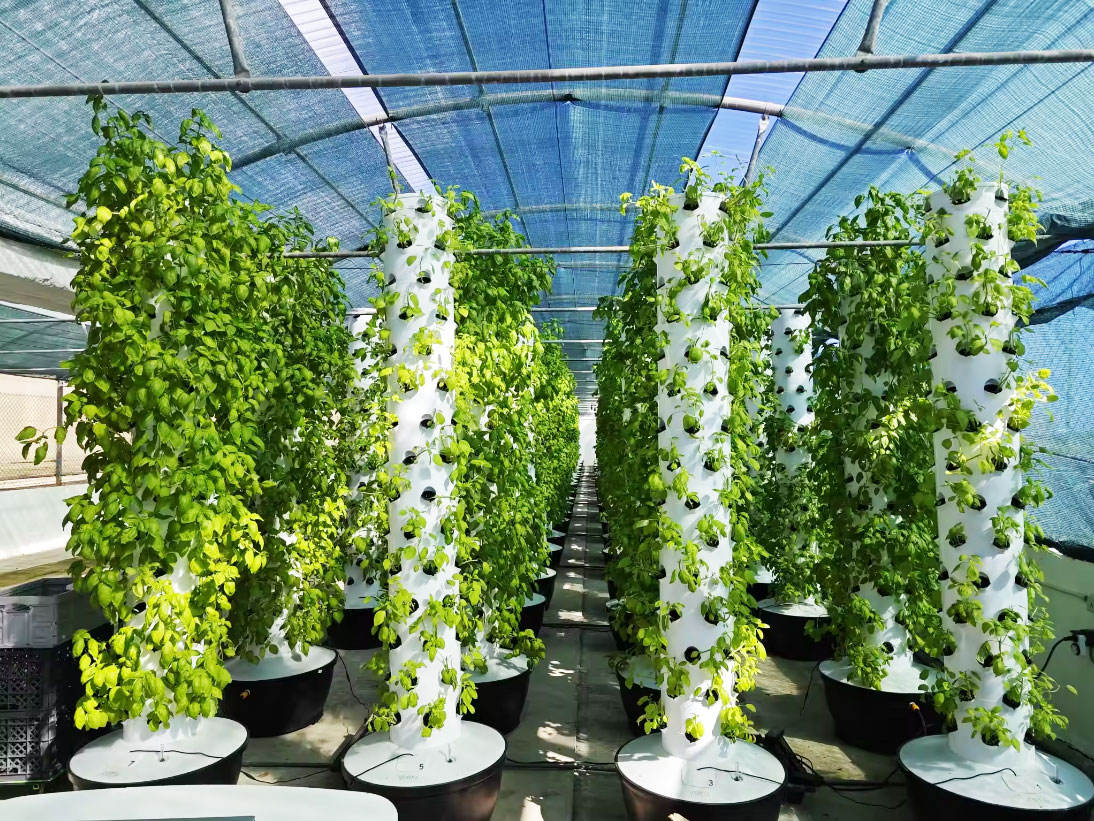
When growers first encounter the concept of a vertical grow system, one of the most immediate questions is whether stacking plants on multiple tiers actually compromises the light each plant receives. It is a legitimate concern. Traditional horizontal cultivation relies on unobstructed overhead light distribution, and the transition to a tiered architecture fundamentally changes that geometry. Understanding how modern vertical grow designs solve this challenge is essential for any grower evaluating multi-layer hydroponic systems.
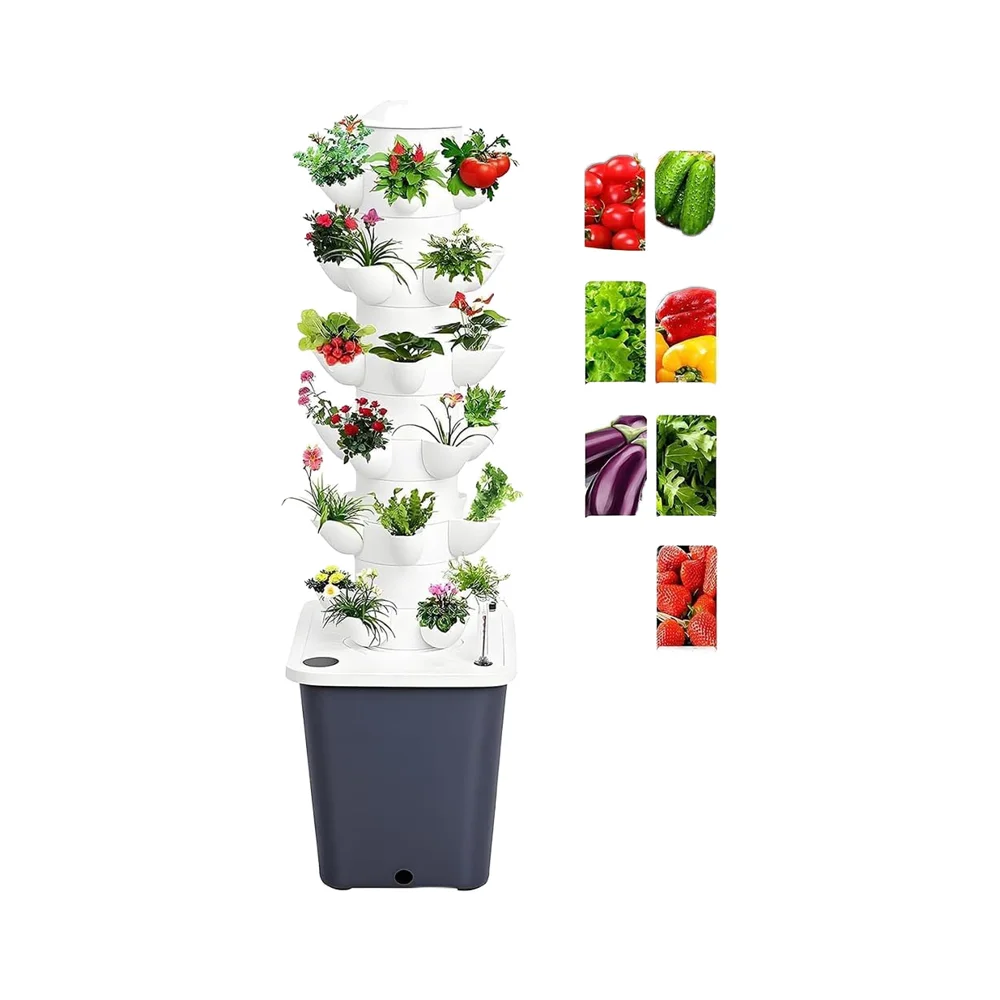
The answer lies in how vertical grow engineering repositions the relationship between light source and plant canopy. Rather than depending on a single overhead fixture to serve an entire floor of plants, a well-designed vertical grow system assigns dedicated lighting zones to each tier. This restructuring does not just preserve light access — it actively increases the precision and efficiency with which photons reach the leaf surface. The sections below explore the mechanisms behind this improvement and what it means for real-world indoor cultivation performance.
The Geometry of Light in Stacked Planting Environments
Why Horizontal Layouts Waste Light Energy
In a conventional single-layer grow setup, a significant portion of the light emitted by overhead fixtures never reaches the plant canopy at an optimal angle. Photons travel downward in a cone pattern, and plants positioned toward the edges of that cone receive lower intensity compared to those directly beneath the source. This uneven distribution means growers often compensate by increasing overall fixture wattage, which raises energy costs without proportionally improving yield.
Additionally, light that passes through gaps in the canopy or reflects off the growing surface without being absorbed represents pure energy waste. In large horizontal systems, this inefficiency compounds as floor space increases. The further a plant sits from the center of the light beam, the less photosynthetically active radiation it captures. These geometric limitations are inherent to the flat-plane model and cannot be fully corrected without restructuring the spatial relationship between plants and light sources.
A vertical grow approach reframes this problem entirely. By introducing multiple horizontal planes arranged vertically, the system allows each tier to be treated as its own micro-cultivation zone with its own light assignment. The geometry shifts from a single wide cone to multiple narrow, targeted light fields, each matched precisely to the tier it serves. This architectural change is the foundation of improved light exposure efficiency in stacked systems.
How Tier Spacing Controls Light Penetration Depth
One of the most critical design variables in a vertical grow configuration is the vertical distance between tiers. If tiers are spaced too closely, light from one level's fixture may bleed into adjacent tiers or fail to penetrate deeply enough into the canopy of the tier it targets. If tiers are spaced too far apart, the physical footprint advantage of the vertical grow system diminishes and the overall light-to-floor-space ratio worsens.
Engineering teams developing vertical grow hardware typically calibrate tier spacing around the beam angle of the intended grow light and the mature canopy height of the target crop. For compact leafy greens and herbs commonly grown in hydroponic tower systems, a tier spacing of 30 to 45 centimeters is generally sufficient to allow adequate light penetration while maintaining a compact overall structure. This precision in spacing means that each plant pod on every tier receives a comparable photon flux, rather than the sharp drop-off seen in single-layer setups.
The structural rigidity of the frame directly supports this calibration. In a high-rigidity vertical grow frame, tier positions remain fixed and consistent over the life of the system, ensuring that the light geometry designed at the engineering stage is preserved during actual operation. Any flex or deformation in a weaker frame would shift tier positions and disrupt the carefully calculated light angles, reducing efficiency over time.
Dedicated Light Zones and Their Role in Efficiency Gains
Assigning Individual Light Sources Per Tier
The most impactful efficiency gain in a modern vertical grow system comes from assigning a dedicated light source to each tier rather than sharing a single overhead fixture across the entire structure. When each tier has its own light positioned at the optimal distance and angle for that specific plant level, every plant in the system sits within the high-efficiency zone of its assigned fixture. There are no outer plants receiving diminished light and no central plants receiving excessive intensity.
This approach also allows growers to use lower-wattage fixtures per tier without sacrificing photon delivery at the canopy level. Because each fixture only needs to illuminate a small, well-defined area rather than a broad floor space, the power-to-output ratio improves significantly. The result is that the same total electrical input to the vertical grow system produces more usable photosynthetically active radiation across all plant sites than an equivalent single-layer system would generate.
For indoor growers operating on tight energy budgets, this efficiency difference translates directly into lower operating costs per gram of produce harvested. It also means that vertical grow systems can be realistically powered in locations where electrical infrastructure is limited, expanding access to controlled-environment agriculture in settings that would not support conventional high-wattage growing rooms.
Uniform Light Distribution Across All Plant Pods
Uniformity is a concept often mentioned in grow light specifications but seldom achieved in practice with single-source horizontal systems. In a vertical grow configuration, uniformity becomes structurally enforced rather than dependent on reflector design alone. Because each tier presents a geometrically consistent target area for its assigned light source, the variation in photon flux from one plant pod to the next on the same tier is minimal.
This uniformity matters enormously for commercial growers who need consistent crop characteristics across all pods at harvest. When some plants receive significantly more light than others, they grow faster, larger, and with different flavor profiles. This variation creates sorting and quality control challenges at harvest. A vertical grow system with well-designed tier lighting reduces this variation and produces more predictable, uniform crops across the full pod count of the system.
Growers running systems with 30 or more pods per unit stand to benefit most from this consistency. At that scale, even small differences in light exposure per pod can result in meaningful variation in total yield and harvest timing. The architectural discipline of the vertical grow format, when properly executed, works to minimize these differences systematically rather than requiring individual plant management adjustments.
The Interplay Between Water Delivery and Light Absorption
Nutrient Flow Positioning to Maximize Canopy Exposure
Light efficiency in a vertical grow system is not solely a function of fixture placement. The way nutrient-rich water is delivered to plant roots also influences how the plant's canopy develops and how effectively it can absorb available light. In a well-designed vertical hydroponic system, water delivery is engineered to maintain root moisture without saturating the growing medium or causing root masses to spill outward in ways that would block light from reaching adjacent pods.
When roots are contained and healthy, the plant directs its growth energy upward and outward into the canopy rather than downward in search of moisture. This canopy development pattern is far more favorable for light capture. A vertical grow system that integrates a timer-controlled water pump allows growers to set precise watering intervals matched to the crop's transpiration rate, keeping roots consistently moist without creating the conditions that drive excessive root sprawl.
The interaction between nutrient delivery timing and light schedule is also worth noting. Growers who synchronize their watering cycles with peak light hours help plants maximize photosynthetic activity during the periods when light intensity is highest. In a vertical grow setup where each tier's environment can be managed with this level of precision, the combined effect of optimized water delivery and consistent light exposure produces growth rates that single-layer systems often cannot match under the same total energy input.
Canopy Management Across Multiple Tiers
In any stacked planting system, the risk of upper-tier plants casting shade onto lower-tier plants is a real concern if canopy growth is not managed. A vertical grow design addresses this through both structural spacing and crop selection guidance. Systems intended for leafy greens and herbs benefit from the naturally compact growth habits of those crops, which do not typically develop canopies large enough to shadow adjacent tiers when tier spacing is properly calibrated.
For growers who wish to cultivate plants with larger canopy spread, canopy trimming becomes an important practice in a vertical grow environment. Regular pruning of lateral growth on each tier ensures that light pathways between tiers remain open and that each tier's dedicated light source can illuminate the full intended pod area without obstruction. This active management practice is a small operational investment relative to the light efficiency gains the vertical grow format provides.
The modularity offered by some vertical grow systems further assists with canopy management. Systems designed with removable or adjustable tier positions allow growers to customize tier spacing based on the specific crops being grown at any given time. This adaptability means the vertical grow unit can maintain peak light efficiency across a broader range of cultivars rather than being optimized only for one crop type.
Space Utilization and the Compounding Effect on Light Efficiency
Vertical Square Footage vs. Horizontal Square Footage
One of the most compelling arguments for a vertical grow system is the multiplication of productive growing area within a fixed floor footprint. When a grower installs a six-tier vertical grow unit in a space that previously supported a single planting layer, they are not simply adding five more plant levels. They are also multiplying the number of plants that fall within the efficient zone of a dedicated light source.
In horizontal systems, expanding growing area means either adding floor space or increasing fixture count and height to cover a larger canopy. Both approaches increase costs substantially. In a vertical grow configuration, adding tiers within the same floor footprint increases plant count without proportionally increasing the spatial requirements for light coverage. Each new tier brings its own small-format light fixture that serves only that tier, keeping marginal lighting costs per additional plant site low.
This compounding effect means that as a vertical grow system scales upward, its light efficiency advantage over horizontal systems tends to increase rather than plateau. The fixed floor footprint becomes progressively more productive per square meter, while the light energy invested per plant site remains relatively stable. For indoor farmers operating in expensive commercial real estate or limited residential spaces, this dynamic changes the economic calculus of controlled-environment agriculture fundamentally.
Indoor and Outdoor Adaptability Without Efficiency Loss
A well-engineered vertical grow system designed for both indoor and outdoor use introduces a further dimension of light efficiency management. Outdoors, natural sunlight reaches all tiers simultaneously, and the vertical grow structure's role shifts from light delivery to canopy organization — ensuring that the vertical separation between tiers allows natural light angles to reach lower tiers during different times of day as the sun moves across the sky.
Indoors, where light direction is fixed and predictable, the vertical grow system's dedicated-tier lighting model operates at maximum efficiency. The controlled environment eliminates variables like cloud cover and seasonal light angle changes, allowing growers to maintain consistent photon delivery to every plant site year-round. This dual-mode capability — performing well both outdoors in natural light and indoors under artificial lighting — makes the vertical grow format a highly versatile choice for growers operating across different environments or shifting cultivation strategies seasonally.
The structural durability of the vertical grow unit is what makes this adaptability practical. A frame that maintains its geometry reliably in varying humidity, temperature, and UV conditions ensures that the light efficiency achieved in the design phase is preserved across the full lifecycle of the system regardless of deployment environment.
FAQ
Does a vertical grow system work well with LED grow lights?
Yes, vertical grow systems are highly compatible with LED grow lights and benefit greatly from their characteristics. LEDs produce focused, directional light output that suits the per-tier light zone model of a vertical grow configuration. Their low heat emission also reduces the risk of heat stress on plants positioned close to the fixture, which is particularly valuable in compact multi-tier setups where fixture-to-canopy distance is smaller than in single-layer rooms.
How many pods can a typical vertical grow system support?
The pod count in a vertical grow system varies by design, but units offering 30 pods or more across multiple tiers are well-suited to household-to-small-commercial applications. A 6-layer system with 30 pods distributes plants evenly across tiers, allowing each tier's light source to cover approximately five to six pods at a consistent distance. This distribution is a key factor in achieving the uniform light exposure that makes a vertical grow system efficient compared to denser single-layer configurations.
Can I grow different crops on different tiers of the same vertical grow unit?
Technically yes, though it requires careful management. Different crops have different light intensity requirements and canopy growth habits. If you place a faster-growing, taller crop on a lower tier, its canopy could eventually interfere with the light path of the tier above it. For best results in a vertical grow context, growers are advised to select crops with similar light requirements and compact growth habits, or to stagger planting times so that taller growth is managed before it encroaches on adjacent tiers.
Is the water pump timer important for light efficiency in a vertical grow system?
While the water pump timer primarily serves nutrient delivery rather than light management directly, it plays a supporting role in light efficiency. A properly timed watering cycle ensures roots are consistently hydrated, which enables optimal stomatal function and photosynthetic activity during light-on periods. In a vertical grow system, synchronizing water delivery with the light schedule means plants are physiologically prepared to make maximum use of available photons, improving the effective return on the light energy invested in the system.