
 EN
EN



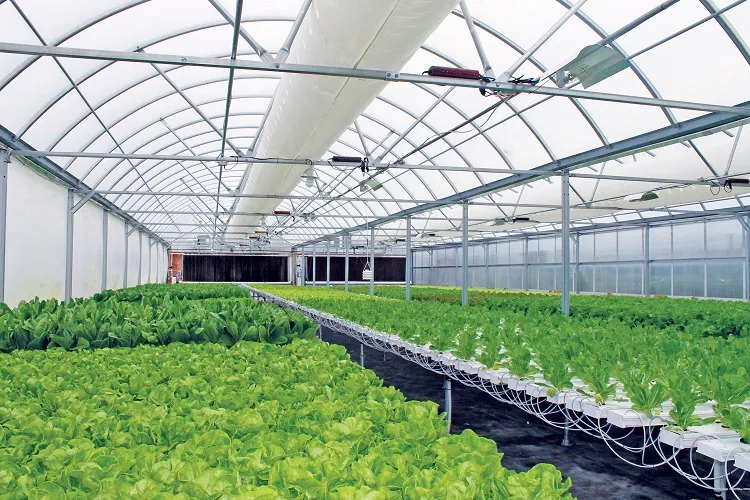
The agricultural sector is undergoing a profound transformation as growers, researchers, and entrepreneurs look for ways to decouple food production from the unpredictable forces of nature. indoor farming has emerged as a powerful answer to this challenge, offering a controlled environment where crops can be cultivated regardless of the season, the local climate, or the geography outside the facility walls. This shift is not merely a technological novelty — it represents a structural change in how humanity approaches food security, resource efficiency, and agricultural resilience.
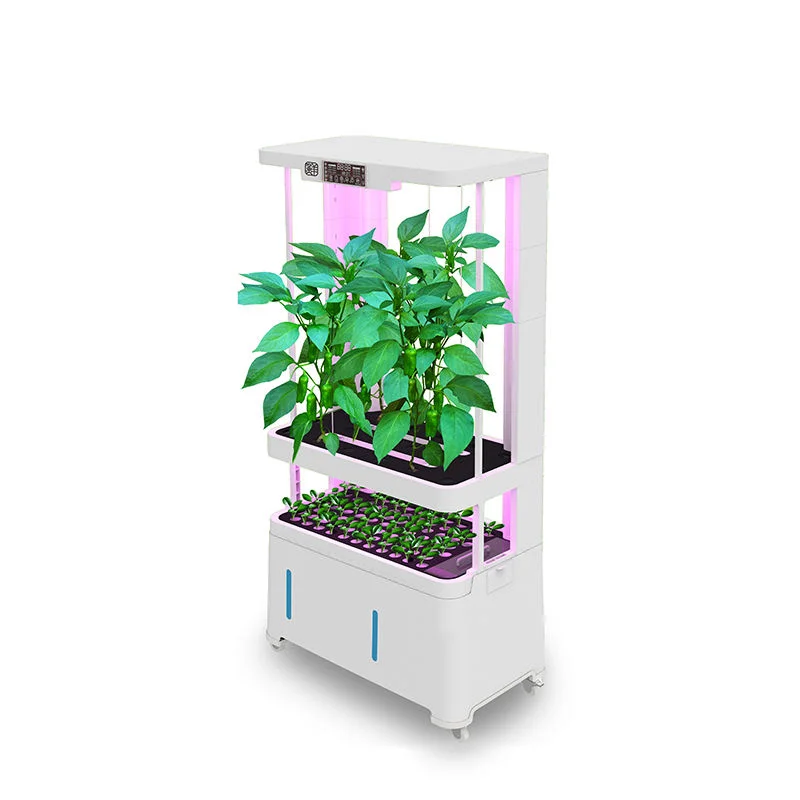
Understanding what makes indoor farming uniquely suitable for climate-independent cultivation systems requires examining the core principles that govern controlled environment agriculture. Unlike traditional open-field methods that must adapt to external conditions, indoor farming inverts this relationship entirely — the environment adapts to the crop, not the other way around. This article explores the fundamental attributes that position indoor farming as the definitive foundation for climate-independent growing, covering its environmental controls, technological integration, resource efficiency, crop consistency, and practical scalability for modern agricultural operations.
The Principle of Environmental Decoupling in Indoor Farming
How Controlled Environments Neutralize External Climate Variables
The core value proposition of indoor farming lies in its ability to establish a fully controlled microclimate that operates independently from outdoor weather patterns. Temperature, humidity, light intensity, CO2 concentration, and air circulation are no longer subject to seasonal fluctuations or regional climate extremes. Instead, they are monitored and adjusted in real time using sensor networks and automated management systems built into modern indoor farming installations.
This environmental decoupling has profound implications. A grower operating in a desert region can cultivate leafy greens that typically require temperate, humid conditions. Similarly, a facility located in a northern region with minimal daylight hours can maintain consistent photosynthetic cycles year-round using artificial lighting calibrated to the specific light spectrum requirements of each crop. The result is a growing environment that bears no meaningful relationship to the climate conditions outside the facility.
In practical terms, this means that indoor farming systems can be deployed virtually anywhere on earth — from urban rooftops to remote rural zones, from tropical coastal areas to landlocked continental interiors. The geographic and climatic constraints that have historically defined where certain crops could be grown are effectively eliminated by the principles underlying indoor farming.
Structural Design Features That Enable Climate Independence
The physical architecture of indoor farming facilities is itself a critical component of climate independence. Insulated panels, sealed growing chambers, and controlled-access airlocks prevent the infiltration of external air, pests, pathogens, and temperature fluctuations. These structural features ensure that whatever environmental parameters are set within the system remain stable and consistent throughout the cultivation cycle.
Modern indoor farming units, including compact smart cabinets and larger vertical farm installations, are engineered to maintain tight environmental tolerances. The materials used in construction are chosen for thermal stability, moisture resistance, and longevity under continuous operation. This engineering precision is what allows indoor farming to function as a genuinely climate-independent system rather than merely a supplementary growing method that still relies on favorable external conditions.
Ventilation systems with HEPA filtration, UV sterilization modules, and redundant climate control units further reinforce the separation between the internal growing environment and the outside world. These layers of environmental management ensure that even in extreme external weather events — whether heatwaves, frost, flooding, or drought — the indoor farming system continues to operate at full capacity without interruption.
Lighting Technology as the Foundation of Year-Round Cultivation
Artificial Light Systems and Their Role in Climate-Independent Growth
One of the most significant reasons that indoor farming is inherently suited to climate-independent cultivation is its use of precisely engineered artificial lighting. Natural sunlight is inherently variable — it changes with latitude, season, cloud cover, and time of day. Artificial grow lighting, by contrast, can be tuned to deliver a consistent photon flux density at any time, in any location, for any duration required by the crop species being cultivated.
LED grow light technology has advanced dramatically in recent years, enabling indoor farming operators to program lighting schedules that simulate optimal growing conditions with remarkable accuracy. Specific wavelengths can be adjusted to promote vegetative growth, accelerate flowering, enhance nutrient density, or manage plant morphology. This level of control over the light environment would be impossible in any outdoor or greenhouse-based system that still relies on natural sunlight as its primary energy source.
The ability to program photoperiods independently of the solar cycle means that indoor farming systems can manipulate plant behavior in ways that directly serve commercial objectives. Crops can be induced to flower out of season, harvest cycles can be shortened through optimized light exposure, and consistent quality can be maintained regardless of whether production is taking place in January or July, in Norway or Singapore.
Energy Efficiency Advances That Support Scalable Indoor Farming
A common concern raised about indoor farming is energy consumption, particularly relating to artificial lighting. However, rapid improvements in LED efficiency, combined with smart energy management systems, have significantly reduced the energy intensity of modern indoor farming operations. Next-generation LED fixtures can deliver the same photosynthetic photon flux density as earlier generations at a fraction of the electricity cost, making climate-independent indoor farming economically viable at a broader range of scales.
Smart control systems now allow indoor farming operators to integrate renewable energy sources such as solar panels or wind turbines into their power infrastructure, further reducing both costs and environmental impact. Time-of-use electricity pricing strategies can also be applied, where energy-intensive lighting schedules are shifted to off-peak hours to minimize operational expenses. These innovations collectively make the energy equation of indoor farming increasingly favorable for long-term, large-scale deployment.
The combination of efficient lighting technology and intelligent energy management reinforces the suitability of indoor farming for climate-independent applications. The system becomes not only environmentally decoupled but also economically self-sustaining, capable of operating profitably in regions where conventional agriculture would be entirely unviable due to climate constraints.
Water and Nutrient Management in Climate-Independent Systems
Hydroponic and Aeroponic Methods That Define Indoor Farming Efficiency
Indoor farming systems typically rely on soil-free cultivation methods such as hydroponics, aeroponics, or aquaponics to deliver water and nutrients directly to plant root systems. These methods are not only more efficient than soil-based agriculture — they are fundamentally more compatible with climate-independent operation because they eliminate the variability introduced by soil composition, drainage conditions, and rainfall patterns.
In hydroponic indoor farming, nutrient solutions are precisely formulated and delivered to plant roots in controlled quantities and at controlled intervals. This eliminates the guesswork associated with soil fertility management and ensures that every plant in the system receives exactly the inputs it needs for optimal development. The result is faster growth rates, higher yields per square meter, and dramatically reduced water consumption compared to conventional outdoor farming.
Aeroponic systems take this efficiency a step further by misting nutrient solutions directly onto exposed root zones, maximizing oxygen availability and nutrient uptake simultaneously. These methods are inherently suited to the climate-independent model because they require no connection to external water sources, can be operated using recirculated and filtered water, and produce minimal runoff or waste. The closed-loop nature of water management in indoor farming systems makes them particularly valuable in water-scarce regions where conventional agriculture would be unsustainable.
Nutrient Precision and Its Impact on Crop Consistency
Climate-independent cultivation depends not only on controlling the physical environment but also on maintaining precise nutritional conditions throughout every growth stage. Indoor farming enables this level of nutritional control through automated dosing systems that continuously monitor pH, electrical conductivity, dissolved oxygen, and individual nutrient concentrations in the growing solution.
This precision translates directly into crop consistency — a critical requirement for commercial indoor farming operations supplying retail, food service, or pharmaceutical markets. When every batch of produce is grown under identical nutritional and environmental conditions, the resulting product is uniform in size, flavor, nutritional content, and visual appearance. This consistency is extremely difficult to achieve in outdoor systems where soil variability, weather events, and seasonal changes introduce inevitable batch-to-batch variation.
For buyers and end customers, this reliability is one of the most compelling commercial advantages of indoor farming. Supply chains can be planned with confidence, quality certifications are easier to maintain, and premium pricing is more justifiable when the product consistently meets defined quality standards. The nutrient management capabilities of indoor farming thus serve both agronomic and commercial functions within a climate-independent production model.
Scalability and Deployment Flexibility Across Diverse Contexts
From Compact Smart Cabinets to Large Vertical Farm Installations
One of the most distinctive features that makes indoor farming suitable for climate-independent cultivation is its extraordinary scalability. The same fundamental principles that govern a compact smart home hydroponic cabinet can be scaled up to multi-story vertical farming facilities occupying entire industrial buildings. This scalability means that indoor farming can be adapted to the specific needs, budgets, and space constraints of virtually any operator, from individual households to large commercial enterprises.
Compact indoor farming units designed for home or small commercial use provide an accessible entry point for operators who want to experience climate-independent cultivation without the capital investment required for larger installations. These units integrate all the essential elements — lighting, irrigation, climate control, and nutrient management — into a self-contained, automated system that can be operated by users with no prior agricultural experience.
At the other end of the spectrum, large-scale indoor farming installations designed for commercial production can cultivate hundreds of thousands of plants simultaneously across multiple growing levels, achieving productivity densities that far exceed what is achievable in equivalent footprints of outdoor farmland. The vertical stacking of growing layers is a unique capability of indoor farming that has no parallel in conventional agriculture, and it is this feature that makes the technology particularly relevant for urban environments where land availability is constrained.
Deployment in Challenging and Non-Traditional Agricultural Zones
The climate-independent nature of indoor farming makes it especially valuable for deployment in regions that have historically been considered unsuitable or marginal for agriculture. Arid desert zones, arctic tundra, high-altitude plateaus, densely populated urban areas, and isolated island communities all present extreme challenges for conventional farming — but are viable locations for indoor farming systems that create their own optimal growing environment.
This deployment flexibility has significant implications for global food security. As climate change continues to disrupt traditional agricultural zones, the ability to establish productive food growing operations in non-traditional locations becomes increasingly important. Indoor farming provides a technology pathway for communities and nations to reduce their dependence on imported food supply chains and build greater local food production capacity regardless of their natural climate conditions.
The modular nature of many indoor farming systems further enhances deployment flexibility. Units can be installed in converted warehouses, shipping containers, basement spaces, or purpose-built structures. This adaptability allows indoor farming to be integrated into existing urban and industrial infrastructure without requiring dedicated agricultural land, making it uniquely suited to the climate-independent cultivation model that serves both developed and developing market contexts.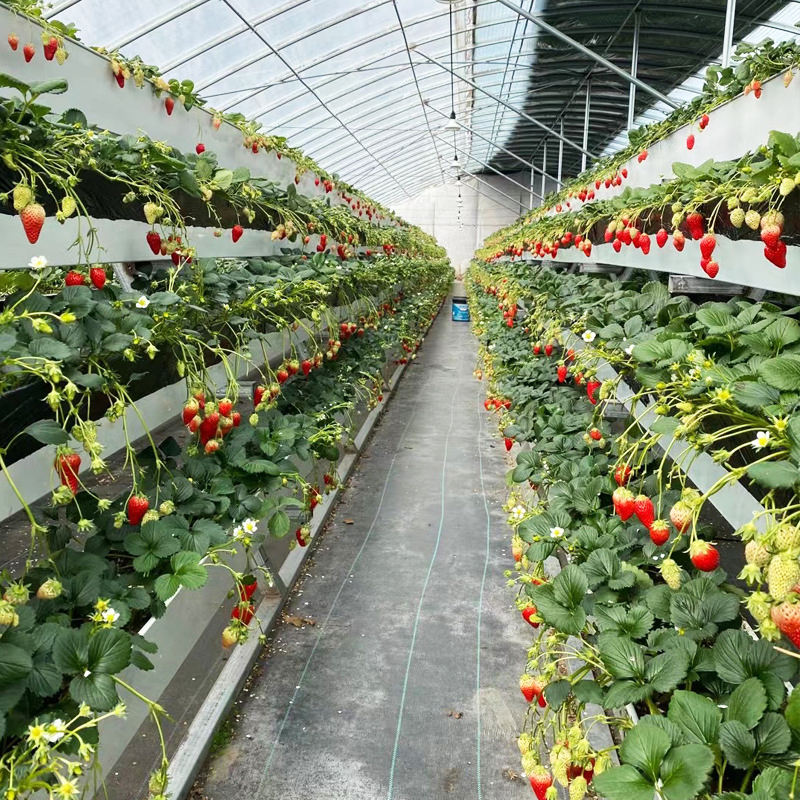
FAQ
What types of crops are most suitable for indoor farming systems?
Indoor farming systems are particularly well suited to high-value, fast-cycling crops such as leafy greens, herbs, microgreens, strawberries, cherry tomatoes, and edible flowers. These crops have relatively short growth cycles, respond well to hydroponic nutrition, and achieve strong market prices that justify the operational investment of climate-independent cultivation. More complex crops such as fruiting vegetables and root vegetables can also be grown in indoor farming environments, though they typically require more advanced system configurations and longer production cycles.
How does indoor farming maintain consistent crop quality without natural sunlight?
Indoor farming systems replace natural sunlight with precisely calibrated LED grow lighting that delivers specific wavelengths and intensities matched to each crop's photosynthetic requirements. Because these lighting systems are fully programmable, they can simulate optimal seasonal light conditions, maintain consistent photoperiods, and even enhance crop quality characteristics such as flavor compounds and nutritional density. This artificial light environment, when combined with controlled temperature and nutrient delivery, produces crops that are highly consistent in quality and composition across every growing cycle.
Is indoor farming economically viable for small-scale commercial operators?
Indoor farming can be economically viable for small-scale commercial operators when focused on high-value crops and local supply chains that command premium pricing. The key factors for commercial viability include selecting crops with strong local market demand, optimizing energy efficiency through LED lighting and smart control systems, minimizing water and nutrient waste through closed-loop management, and achieving high production density through vertical stacking. As technology costs continue to decline and operational efficiencies improve, the economic threshold for viable indoor farming operations continues to move in favor of smaller-scale operators.
How does indoor farming contribute to climate resilience in food supply chains?
Indoor farming contributes to climate resilience by creating food production capacity that operates independently of external weather events, seasonal variability, and long-term climate shifts. Because indoor farming systems are not affected by drought, flooding, frost, or extreme heat events, they provide a stable production baseline that can offset disruptions in conventional agricultural supply chains. This makes indoor farming an increasingly important strategic component of food security planning for governments, cities, and commercial food businesses that need reliable, locally produced food supplies regardless of what is happening in the broader agricultural environment.
Table of Contents
- The Principle of Environmental Decoupling in Indoor Farming
- Lighting Technology as the Foundation of Year-Round Cultivation
- Water and Nutrient Management in Climate-Independent Systems
- Scalability and Deployment Flexibility Across Diverse Contexts
-
FAQ
- What types of crops are most suitable for indoor farming systems?
- How does indoor farming maintain consistent crop quality without natural sunlight?
- Is indoor farming economically viable for small-scale commercial operators?
- How does indoor farming contribute to climate resilience in food supply chains?