
 EN
EN



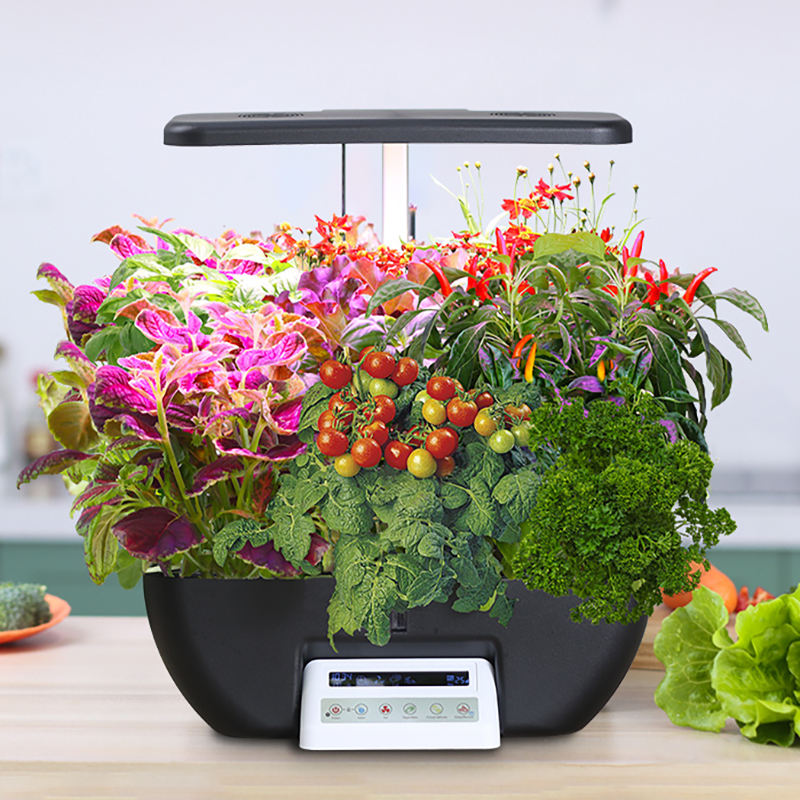
A hydroponic system represents one of the most precise and controllable methods for delivering nutrients directly to plant roots, bypassing the unpredictability of traditional soil-based agriculture. In environments where consistent plant quality, crop yield, and growth cycles are critical business requirements, the ability to fine-tune nutrient delivery is not merely a convenience — it is a fundamental operational advantage. Understanding what makes a hydroponic system inherently suitable for controlled nutrient plant growth management begins with recognizing how the architecture of soilless cultivation aligns with the demands of modern precision growing.
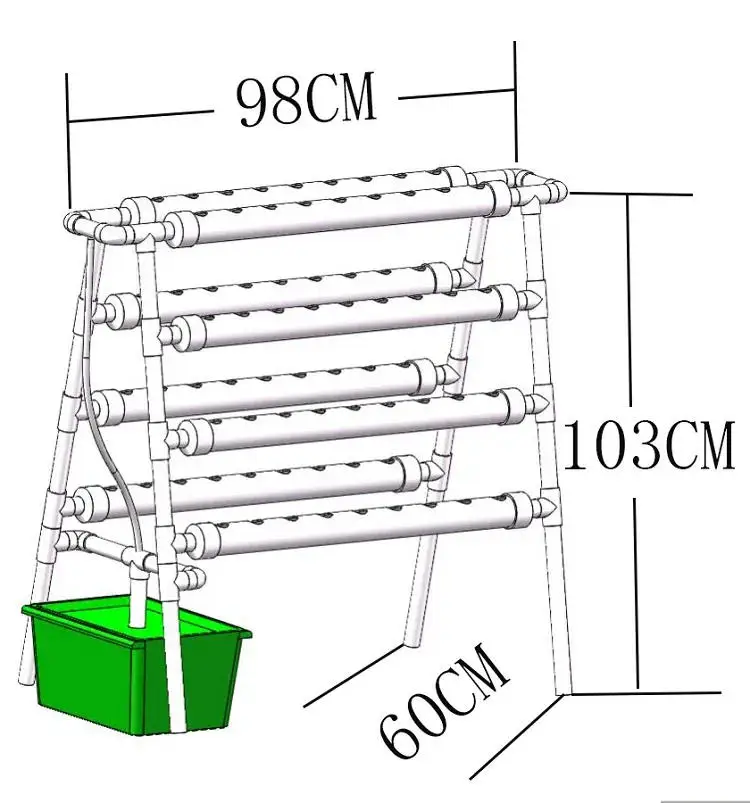
Unlike traditional growing methods, a hydroponic system places the grower in complete command of the root-zone environment. Nutrient concentration, pH balance, water temperature, and delivery timing are all measurable and adjustable variables within a well-designed hydroponic system. This degree of control is what separates hydroponic cultivation from conventional agriculture, especially when consistency and plant performance are non-negotiable priorities for commercial, research, or industrial growing operations.
The Core Architecture of a Hydroponic System and Nutrient Control
How Soilless Growing Enables Direct Nutrient Access
In a hydroponic system, plants receive their nutrients dissolved in water rather than filtered through layers of variable-quality soil. This direct delivery mechanism eliminates one of the most significant barriers to controlled nutrient management: the unpredictable interaction between soil chemistry, microbial activity, and plant root absorption. When nutrients are suspended in a calibrated water solution, the grower sets the exact elemental composition that each plant receives at every growth stage.
The elimination of soil also removes the nutrient-binding phenomenon that occurs when minerals attach to soil particles and become unavailable to plant roots. In a properly maintained hydroponic system, every dissolved nutrient ion remains available for uptake, meaning less waste and more efficient use of inputs. This efficiency is particularly relevant in commercial operations where input costs and crop consistency directly affect profit margins.
From a plant physiology perspective, direct nutrient access allows faster uptake and reduces the energy plants expend developing extensive root systems to search for nutrients. That energy is redirected toward vegetative growth and reproductive development, resulting in faster growth cycles and higher yields per square meter — a core reason why a hydroponic system is so well-suited for controlled growth management environments.
System Design Features That Support Nutrient Precision
Different types of hydroponic system configurations — including NFT (Nutrient Film Technique), deep water culture, and drip systems — share a common design principle: continuous or timed circulation of a nutrient solution that can be monitored and adjusted in real time. NFT-based hydroponic system designs, for example, use channels through which a thin film of nutrient-rich water flows constantly over plant roots, enabling both oxygenation and nutrient delivery simultaneously.
These structural designs allow for integrated monitoring points where electrical conductivity (EC) and pH sensors can be installed. EC measurement directly reflects the total dissolved nutrient concentration in the hydroponic system's water supply, giving operators an immediate and quantifiable signal of whether nutrient levels are within the target range for a specific crop and growth stage. This measurement capability is not available in soil-based growing without complex soil testing procedures.
The channel-based or reservoir-based architecture of a hydroponic system also means that nutrient formulations can be changed, diluted, or concentrated with a high degree of speed and accuracy. Whether a crop requires a nitrogen-heavy vegetative formula or a phosphorus-rich formula for flowering, the transition can be managed within hours rather than days, which is a transformative advantage over soil amendment processes.
Nutrient Management Precision Across Different Growth Stages
Stage-Specific Formulation in a Hydroponic System
One of the most powerful attributes of a hydroponic system is the ability to tailor nutrient solutions to match the precise biological needs of each plant growth stage. During the seedling phase, plants require a diluted, balanced nutrient solution with lower EC values to avoid root burn while supporting early cellular development. A hydroponic system allows growers to pre-formulate these stage-specific solutions and transition between them without disrupting the growing environment.
As plants progress into vegetative growth, nitrogen requirements increase substantially. In a hydroponic system, this shift is managed by adjusting the concentration of nitrogen compounds in the reservoir, often in combination with elevated potassium and magnesium to support chlorophyll production and photosynthetic efficiency. These adjustments can be made incrementally, allowing growers to observe plant response and calibrate accordingly without the lag time associated with soil amendment uptake.
During the fruiting or flowering stage, a hydroponic system enables a further shift toward higher phosphorus and potassium ratios, which are known to support energy transfer processes during reproductive growth. The ability to execute this nutrient shift cleanly — without residual soil chemistry interfering with availability — means that growers can consistently replicate successful production cycles and build reliable crop management protocols over time.
Real-Time Monitoring and Adjustment Capabilities
A hydroponic system integrates naturally with digital monitoring tools that give growers actionable, real-time data about the nutrient environment their crops are experiencing. Automated dosing systems connected to EC and pH controllers can maintain the nutrient solution within a pre-defined tolerance range without requiring constant manual intervention, reducing both labor cost and the risk of human error in nutrient management.
This closed-loop monitoring approach is especially valuable in large-scale commercial hydroponic system installations where hundreds or thousands of plants must receive consistent nutrient exposure simultaneously. Deviation from target nutrient levels can be detected and corrected within minutes, preventing the cumulative growth deficits that can occur in traditional growing environments where problems may not become visible until they are well advanced.
The data generated by a monitored hydroponic system also creates a traceable growth record that operators can use to refine future growing cycles. Patterns between nutrient parameters and plant performance become visible over time, enabling growers to develop crop-specific protocols that optimize both quality and efficiency — a data-driven advantage that is unique to precision hydroponic system environments.
Environmental Control Integration in Hydroponic System Operations
Synergy Between Nutrient Management and Environmental Variables
A hydroponic system does not operate in isolation — it functions as part of a broader controlled environment that includes lighting, temperature, humidity, and CO2 management. The reason a hydroponic system is so effective for controlled nutrient plant growth management is that nutrient uptake is directly influenced by these surrounding environmental conditions. Root zone temperature, for example, affects the viscosity of the nutrient solution and the rate of ion uptake by plant roots.
When environmental controls are coordinated with the nutrient delivery schedule of a hydroponic system, growers can maximize the physiological conditions for nutrient absorption. For instance, maintaining optimal root zone temperatures between 18 and 22 degrees Celsius enhances oxygen solubility in the nutrient solution, promoting aerobic root metabolism and improving the efficiency with which plants absorb dissolved minerals from the hydroponic system's water supply.
Lighting schedules also interact with nutrient demands in a hydroponic system environment. Plants under high-intensity lighting during active photosynthetic periods consume nutrients at higher rates than during dark periods. Awareness of this dynamic allows growers to align nutrient replenishment cycles with peak demand windows, reducing solution depletion and maintaining stable EC levels throughout the day.
Water Quality and Its Role in Hydroponic System Performance
The quality of the base water used in a hydroponic system directly affects nutrient management precision. Source water with high calcium or magnesium content will already contribute to the total EC reading before any nutrient formula is added, which can distort dosing calculations if not accounted for. Many professional hydroponic system operators begin with reverse osmosis filtered water to establish a neutral baseline, giving them complete control over the nutrient profile from the first mineral addition.
pH stability is equally critical in a hydroponic system because the availability of specific nutrients is pH-dependent. Iron, manganese, and boron, for instance, become progressively less available as pH rises above 6.5, even if they are present in the solution at adequate concentrations. Maintaining pH within the optimal range of 5.5 to 6.5 in a hydroponic system ensures that the elemental nutrients present in the solution are actually accessible to plant roots in biologically useful forms.
Regular water top-up and periodic full reservoir replacements are standard maintenance practices within a hydroponic system that prevent the buildup of sodium, chloride, and unused mineral residues that can skew the nutrient balance over time. These practices are straightforward to execute in a well-designed hydroponic system layout and represent an important part of maintaining the controlled growing conditions that make soilless cultivation so effective.
Commercial and Industrial Advantages of Hydroponic System Nutrient Control
Scalability and Consistency Across Large Operations
One of the most compelling commercial arguments for adopting a hydroponic system is the consistency it delivers at scale. In a traditional field operation, soil variation across even a single hectare can result in significant differences in crop quality and yield. A centrally managed hydroponic system, by contrast, delivers the same nutrient formula to every plant in the system simultaneously, creating a uniformity of growing conditions that is nearly impossible to replicate in soil-based agriculture.
This consistency is particularly valuable for buyers in the food service, pharmaceutical, and specialty crop industries who require predictable quality and supply timelines. A hydroponic system makes it possible for growers to commit to these requirements with confidence, because the controllable inputs — including nutrient formulation — reduce the variability that causes unpredictable outcomes in conventional growing.
Scalability is also supported by the modular nature of many hydroponic system designs. NFT channel-based systems, for example, can be expanded by adding additional growing channels without fundamentally redesigning the nutrient delivery infrastructure. This means that as production demand grows, the hydroponic system can be scaled without proportional increases in management complexity, provided the central nutrient reservoir and monitoring systems are sized appropriately.
Resource Efficiency and Sustainable Production Logic
A hydroponic system is inherently resource-efficient because nutrients are contained within a recirculating system rather than applied broadly to open soil where runoff and leaching losses occur. Studies across commercial hydroponic system operations have consistently shown that water usage can be reduced by 70 to 90 percent compared to conventional irrigation, and nutrient loss to the surrounding environment is dramatically minimized.
This efficiency has important implications for both operational cost and environmental compliance. Growers operating a hydroponic system in regions with water scarcity or strict nutrient runoff regulations benefit from a cultivation model that is structurally aligned with sustainable resource management. Nutrient solutions that are no longer suitable for the main crop can often be diluted and used on ornamental or secondary crops, extending the value of every input applied to the hydroponic system.
From a production planning perspective, the predictability offered by a controlled hydroponic system also reduces the financial risk associated with crop failures caused by soil pathogens, uneven nutrient distribution, or weather-related variability. When nutrient delivery is managed through a closed, monitored hydroponic system, the primary risk factors shift from environmental unpredictability to controllable operational variables — a fundamentally more manageable business position.
FAQ
What nutrients are typically managed in a hydroponic system?
A hydroponic system manages all essential macro and micronutrients that plants require for healthy growth, including nitrogen, phosphorus, potassium, calcium, magnesium, sulfur, iron, manganese, zinc, copper, boron, and molybdenum. These elements are dissolved in precise concentrations in the nutrient solution and can be adjusted based on crop type, growth stage, and observed plant response. The ability to control all of these elements simultaneously is what makes a hydroponic system so effective for precision nutrient management.
How does a hydroponic system maintain the correct pH for nutrient uptake?
pH in a hydroponic system is maintained through the addition of pH-up or pH-down solutions, which are typically potassium hydroxide and phosphoric acid respectively. Automated pH controllers continuously monitor the solution and dose corrective agents when pH drifts outside the target range. Most crops perform optimally within a pH of 5.5 to 6.5 in a hydroponic system, and maintaining this range ensures that all dissolved nutrients remain in forms that are biologically available to plant roots.
Is a hydroponic system suitable for both leafy crops and fruiting crops?
Yes, a hydroponic system is highly adaptable and has been successfully implemented for leafy greens such as lettuce and spinach, as well as for fruiting crops including tomatoes, cucumbers, and peppers. The key difference lies in the nutrient formulation strategy — leafy crops generally require higher nitrogen ratios while fruiting crops demand elevated phosphorus and potassium during their reproductive stages. A well-managed hydroponic system can accommodate both crop types by adjusting the nutrient solution to match each crop's specific requirements.
What is the role of electrical conductivity monitoring in a hydroponic system?
Electrical conductivity (EC) is the primary measurement used in a hydroponic system to quantify total dissolved nutrient concentration. As plants absorb nutrients from the solution, the EC level drops, signaling that replenishment is needed. Conversely, if water evaporates faster than nutrients are absorbed, EC rises, indicating that dilution is required. By monitoring EC continuously, operators of a hydroponic system can maintain nutrient levels within the precise range needed for optimal plant growth at every stage of the production cycle.