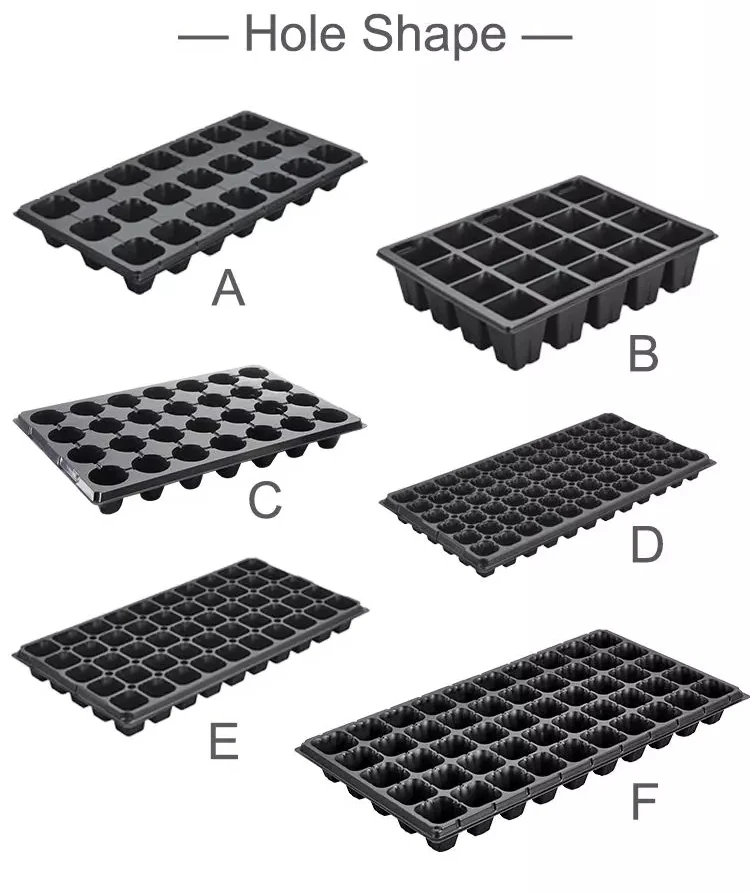
Premium Reusable Seedling Trays - Durable, Eco-Friendly Plant Propagation Solutions

Get a Free Quote

Our representative will contact you soon.
Email
Name
Company Name
Message
0/1000

reusable seedling trays

Reusable seedling trays represent a revolutionary advancement in horticultural propagation technology, designed to meet the growing demands of sustainable gardening practices. These innovative containers provide an eco-friendly alternative to traditional single-use plastic trays, incorporating durable materials and intelligent design features that support optimal plant growth while reducing environmental impact. The primary function of reusable seedling trays centers on creating controlled microenvironments for seed germination and early plant development. Each tray features precisely engineered cell compartments that promote healthy root development through superior drainage systems and air circulation channels. The technological foundation of these trays incorporates advanced polymer compositions that resist cracking, warping, and UV degradation, ensuring multiple seasons of reliable performance. Modern reusable seedling trays utilize injection-molded construction techniques that create uniform cell depths and consistent wall thickness, promoting even water distribution and root growth patterns. The bottom drainage systems feature strategically placed holes that prevent waterlogging while maintaining adequate moisture retention. Many models incorporate root pruning technology through specialized cell designs that naturally guide root development and prevent root binding. Temperature regulation capabilities are enhanced through material selection that provides thermal buffering, protecting delicate seedlings from extreme temperature fluctuations. Applications for reusable seedling trays span across commercial nurseries, greenhouse operations, educational institutions, and home gardening enthusiasts. Professional growers utilize these systems for large-scale propagation of vegetables, herbs, ornamental plants, and tree seedlings. Educational programs benefit from the durability and teaching opportunities these trays provide for demonstrating plant biology concepts. Home gardeners appreciate the cost-effective nature of reusable systems for starting seasonal vegetables and flowers. The trays accommodate various growing media, from traditional potting soils to modern hydroponic substrates, making them versatile tools for different cultivation methods.
New Product Releases

Reusable seedling trays deliver exceptional economic benefits that compound over multiple growing seasons, making them a smart investment for both commercial and residential applications. Users save substantial money by eliminating the recurring expense of purchasing disposable trays, with typical payback periods occurring within the first two seasons of use. The durability of these systems means gardeners can rely on the same equipment year after year, reducing procurement time and storage space requirements for replacement materials. Environmental advantages of reusable seedling trays significantly reduce plastic waste generation, aligning with sustainable gardening practices that modern consumers increasingly demand. Each tray eliminates dozens of single-use containers from entering waste streams, contributing to meaningful environmental conservation efforts. The manufacturing process for durable trays requires less frequent production cycles, reducing overall carbon footprint compared to continuous manufacturing of disposable alternatives. Superior plant health outcomes result from the engineered design features that optimize growing conditions for developing seedlings. Enhanced drainage systems prevent root rot and fungal diseases that commonly affect plants in poorly designed containers. The thermal properties of quality materials provide better temperature stability, protecting sensitive seedlings from harmful temperature swings that can stress or kill young plants. Improved air circulation through specialized vent designs promotes stronger stem development and reduces the risk of damping-off disease. Operational efficiency gains make reusable seedling trays particularly valuable for commercial growers and serious hobbyists. The standardized sizing allows for efficient use of greenhouse space and automated handling systems. Cleaning and sterilization procedures are straightforward, enabling quick turnaround between growing cycles. The robust construction withstands repeated handling, washing, and storage without structural degradation. Many models feature stackable designs that optimize storage space during off-seasons. Quality control advantages emerge from the consistent cell dimensions and drainage characteristics that remain stable over time. Unlike flimsy disposable trays that may warp or crack during use, reusable systems maintain their structural integrity, ensuring uniform growing conditions across all seedling positions. This consistency leads to more predictable germination rates and uniform plant development, critical factors for commercial success and gardening satisfaction.

Latest News

Hydroponic Vertical Farming_ Empowering Legal Cultivation Markets Globally

09

Feb

Hydroponic Vertical Farming_ Empowering Legal Cultivation Markets Globally

View More
Planting Containers: Unlocking New Possibilities for Smart Agriculture, Creating Efficient and Movable Planting Spaces

11

Mar

Planting Containers: Unlocking New Possibilities for Smart Agriculture, Creating Efficient and Movable Planting Spaces

View More
Vertical Farming Machines, Greenhouse Cultivation & Hydroponics: Reshaping the Future of Agriculture

09

Feb

Vertical Farming Machines, Greenhouse Cultivation & Hydroponics: Reshaping the Future of Agriculture

View More

Get a Free Quote

Our representative will contact you soon.
Email
Name
Company Name
Message
0/1000

reusable seedling trays

Advanced Drainage Technology for Optimal Root Development

Advanced Drainage Technology for Optimal Root Development

The sophisticated drainage system integrated into reusable seedling trays represents a cornerstone feature that distinguishes these products from basic alternatives. This technology incorporates precision-engineered drainage holes strategically positioned at the bottom of each cell to create an optimal balance between water retention and excess moisture removal. The drainage hole diameter and placement undergo careful calculation to prevent soil loss while ensuring adequate water flow, preventing the waterlogged conditions that commonly lead to root rot and seedling mortality. Advanced models feature graduated drainage systems where hole sizes vary across different zones of the tray, accommodating plants with varying water requirements within the same growing system. The drainage technology extends beyond simple perforation to include raised bottom surfaces that create air gaps beneath the growing medium. These air spaces facilitate superior oxygen circulation to developing root systems, promoting healthier and more robust root development compared to flat-bottomed containers. The increased oxygen availability stimulates beneficial microbial activity in the growing medium, creating a more favorable environment for nutrient uptake and plant establishment. Premium reusable seedling trays incorporate multi-level drainage architecture featuring primary drainage holes for standard water removal and secondary overflow channels that activate during periods of excessive watering or rainfall. This redundant drainage system provides insurance against overwatering mistakes that frequently damage seedling crops. The overflow system also includes debris capture features that prevent drainage holes from becoming clogged with growing medium particles or organic matter. Temperature regulation benefits emerge from the drainage technology as excess water removal prevents the thermal mass effects that can create temperature instability in the root zone. The air circulation promoted by effective drainage helps moderate soil temperatures, protecting sensitive seedlings from both overheating and excessive cooling. This thermal regulation capability becomes particularly important in greenhouse environments where temperature control directly impacts production success and energy costs.
Unmatched Durability Through Premium Material Engineering

Unmatched Durability Through Premium Material Engineering

The exceptional durability of reusable seedling trays stems from advanced material engineering that incorporates high-grade polymers specifically selected for horticultural applications. These materials undergo rigorous testing to ensure resistance to UV degradation, chemical corrosion from fertilizers and pesticides, and mechanical stress from repeated handling and washing cycles. The molecular structure of the polymer composition provides flexibility that prevents cracking under temperature variations while maintaining structural rigidity necessary for proper plant support. Manufacturing processes utilize injection molding techniques that create uniform wall thickness and eliminate weak points commonly found in cheaper alternatives. The molding process ensures consistent cell dimensions across the entire tray, providing uniform growing conditions for all seedlings. Quality control measures during production include stress testing that simulates years of normal use, ensuring each tray meets durability standards before reaching customers. The material formulation includes UV stabilizers that prevent degradation from prolonged sun exposure, making these trays suitable for both indoor and outdoor applications. Temperature resistance characteristics allow the trays to withstand freezing conditions without becoming brittle and high-temperature exposure without warping or softening. This temperature stability proves essential for growers in diverse climatic conditions who require equipment that performs reliably across seasonal variations. Chemical resistance properties protect against degradation from common fertilizers, fungicides, and cleaning agents used in horticultural operations. The non-reactive surface prevents chemical bonding that could affect plant health or compromise the structural integrity of the tray over time. Mechanical durability testing demonstrates the ability to withstand repeated dropping, stacking loads, and handling stress that occurs during normal use. The reinforced rim design and strategic ribbing patterns distribute stress loads evenly, preventing localized failure points that could compromise the entire tray. Long-term performance studies show minimal dimensional change or surface degradation after multiple years of intensive use, validating the investment value for commercial operations and dedicated gardeners who demand reliable, long-lasting equipment.
Versatile Design Adaptability for Diverse Growing Applications

Versatile Design Adaptability for Diverse Growing Applications

The versatile design adaptability of reusable seedling trays addresses the diverse needs of modern horticultural applications through innovative modularity and customizable features. These trays accommodate various cell sizes and configurations to support different plant species, from tiny herb seeds requiring small growing spaces to larger vegetable seedlings needing expanded root development areas. Interchangeable cell insert systems allow users to modify tray configurations based on specific crop requirements, maximizing the utility of their investment across different growing seasons and plant varieties. The modular design philosophy extends to compatibility with existing greenhouse infrastructure, fitting standard propagation benches, heating mats, and automated watering systems without requiring costly modifications to established operations. Universal sizing standards ensure that reusable seedling trays integrate seamlessly with industry-standard equipment, from germination chambers to transplanting machinery. This compatibility reduces operational friction and allows growers to upgrade their propagation systems incrementally without wholesale equipment replacement. Customizable labeling systems integrated into many tray designs facilitate organization and tracking of different varieties and planting dates. These organizational features prove invaluable for commercial operations managing multiple crops simultaneously and home gardeners experimenting with diverse plant varieties. The labeling systems resist fading and chemical degradation, maintaining legibility throughout extended use periods. Stacking capabilities multiply the utility of available space, particularly important for operations with limited growing area. The engineered stacking features ensure stable tower construction while maintaining adequate air circulation between levels. Drainage alignment systems in stackable models prevent water damage to lower trays while facilitating efficient watering practices. Specialized applications support includes compatibility with hydroponic growing systems, organic soil cultivation, and seed starting media. The neutral material composition does not interfere with nutrient solutions or organic growing practices, making these trays suitable for diverse cultivation philosophies. Growing medium retention systems accommodate various substrate types from fine seed starting mixes to coarser organic composts. The adaptability extends to different cultivation methods including bottom-watering systems, misting propagation, and traditional top-watering approaches. Flexible growing protocols supported by these trays enable experimentation with different propagation techniques while maintaining the equipment investment value across changing operational needs.

Get a Free Quote

Our representative will contact you soon.
Email
Name
Company Name
Message
0/1000